
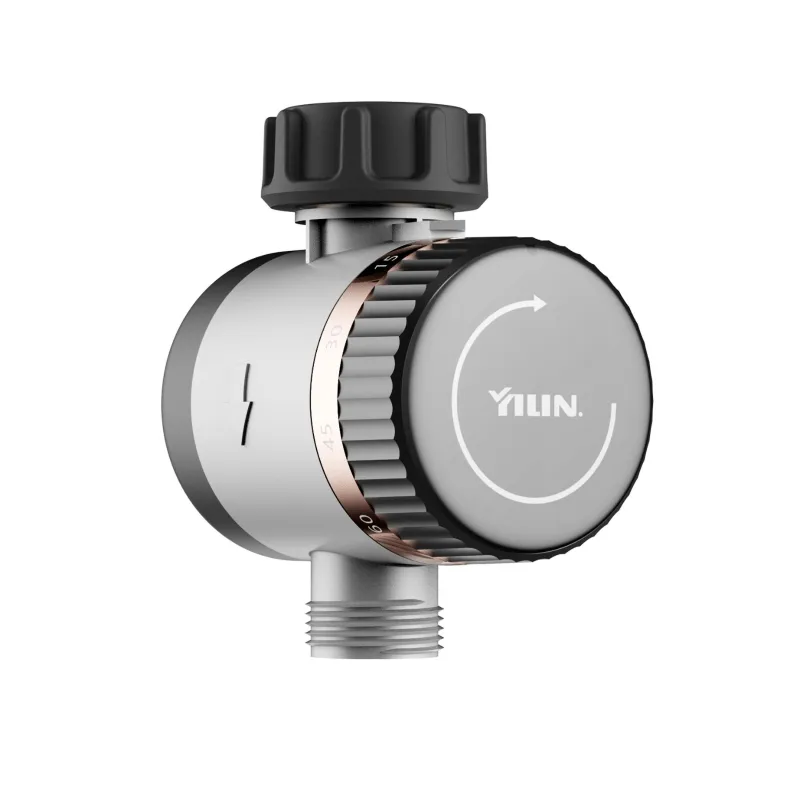
The global agricultural sector stands at a critical juncture where water scarcity, climate volatility, and food security demands converge to reshape farming practices fundamentally. As freshwater resources decline and agricultural water consumption accounts for nearly seventy percent of global withdrawals, the integration of advanced agricultural irrigation components has transitioned from an operational option to an existential imperative. Modern sustainable farming systems now depend on precision-engineered irrigation technologies that optimize water delivery, minimize waste, and enable data-driven resource management across diverse cropping systems and environmental conditions.
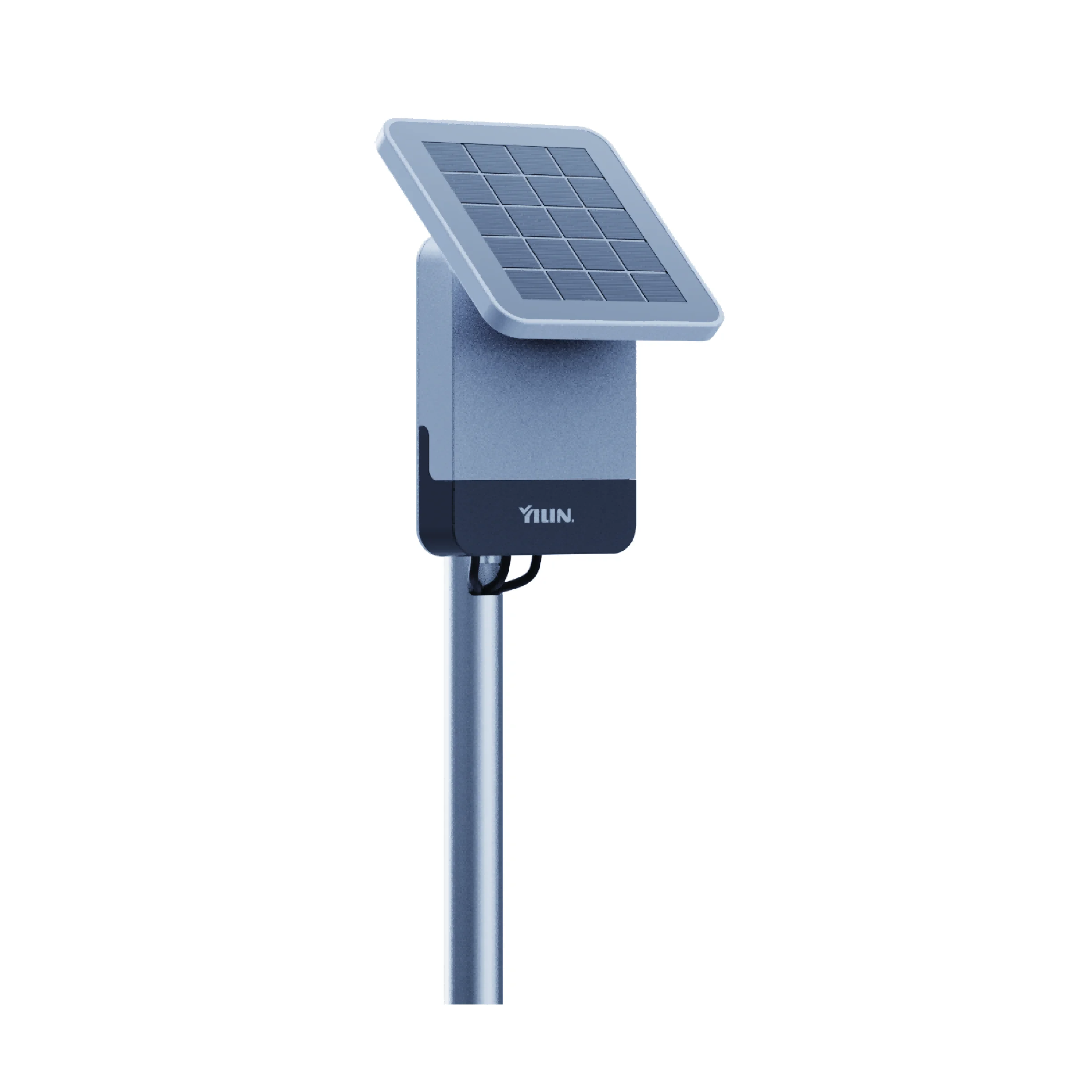
The future landscape of sustainable agriculture will be defined by intelligent irrigation infrastructures that combine mechanical precision with digital intelligence, transforming traditional water distribution into responsive, adaptive systems. This evolution encompasses not merely incremental improvements in component efficiency but a fundamental reimagining of how farming operations interact with increasingly constrained water resources. Understanding the technological trajectory of agricultural irrigation components provides essential insight for farm managers, agribusiness investors, and policymakers navigating the complex intersection of productivity demands and environmental stewardship in an era of accelerating climate change.
Technological Evolution Driving Water Efficiency
Precision Control Systems Redefining Water Distribution
Contemporary agricultural irrigation components have evolved far beyond simple mechanical valves and timers to incorporate sophisticated control architectures that enable field-level precision in water application. Advanced irrigation controllers now integrate multiple sensor inputs, weather forecasting data, soil moisture analytics, and crop-specific evapotranspiration models to calculate optimal irrigation schedules dynamically. These systems adjust water delivery in real-time based on actual plant needs rather than fixed schedules, reducing water consumption by thirty to fifty percent compared to conventional approaches while maintaining or improving crop yields across commercial operations.
The integration of wireless communication protocols within modern agricultural irrigation components creates networked infrastructures where individual field zones operate as coordinated elements of larger water management systems. Controllers equipped with cellular, LoRa, or satellite connectivity enable remote monitoring and adjustment of irrigation parameters across geographically dispersed farming operations. This connectivity transforms irrigation from a labor-intensive manual process into an automated system that responds to changing conditions without constant human intervention, dramatically reducing operational costs while improving water use efficiency throughout growing seasons.
Material Science Innovations Enhancing Component Longevity
The durability and reliability of agricultural irrigation components directly impact long-term sustainability by reducing replacement frequency, minimizing resource consumption in manufacturing, and decreasing operational disruptions. Recent advances in polymer chemistry have produced irrigation tubing, fittings, and emitter bodies with enhanced UV resistance, chemical stability, and mechanical strength that extend service life beyond twenty years in harsh agricultural environments. These materials maintain hydraulic performance characteristics throughout extended deployment periods, ensuring consistent water distribution efficiency without degradation that would increase water waste or create uneven crop development patterns.
Corrosion-resistant alloys and composite materials now replace traditional metals in critical agricultural irrigation components such as valve bodies, pump housings, and filtration systems exposed to fertilizer-laden water or challenging soil chemistry. These engineered materials resist chemical attack and biological fouling that historically shortened component lifespan and degraded system performance. The resulting infrastructure reliability reduces maintenance requirements, extends replacement cycles, and minimizes the environmental footprint associated with manufacturing and disposing of irrigation equipment throughout agricultural operations.
Smart Integration Transforming Farm Water Management
Sensor Networks Enabling Responsive Irrigation Decisions
Modern sustainable farming systems deploy distributed sensor networks that continuously monitor soil conditions, microclimate parameters, and plant physiological status to inform irrigation decisions with unprecedented precision. Soil moisture sensors positioned throughout growing zones provide real-time data on water availability at various root depths, enabling agricultural irrigation components to deliver water only when and where crops require supplementation. This sensor-driven approach eliminates the guesswork inherent in schedule-based irrigation, preventing both water stress that reduces yields and over-irrigation that wastes resources while promoting disease conditions and nutrient leaching.
The integration of weather station data with soil and crop sensors creates comprehensive decision support frameworks that optimize irrigation timing based on atmospheric demand, precipitation forecasts, and evapotranspiration rates specific to crop varieties and growth stages. Advanced agricultural irrigation components now incorporate predictive algorithms that anticipate water requirements days in advance, pre-positioning soil moisture levels to minimize irrigation needs during peak demand periods or scheduling applications to avoid inefficient daytime watering when evaporation losses are highest. These intelligent systems transform irrigation from reactive water application to proactive resource optimization aligned with plant physiology and environmental conditions.
Data Analytics Optimizing Multi-Season Performance
The operational data generated by connected agricultural irrigation components provides valuable insights that extend beyond immediate irrigation decisions to inform long-term farm management strategies. Detailed records of water application volumes, timing patterns, system pressures, and corresponding crop performance enable analysis of irrigation effectiveness across fields, seasons, and crop rotations. This historical perspective reveals opportunities for infrastructure improvements, identifies underperforming zones requiring component upgrades or maintenance, and quantifies water savings achieved through system optimization efforts with precision that supports investment justification and regulatory compliance reporting.
Machine learning algorithms applied to accumulated irrigation performance data identify subtle patterns and correlations invisible to human observation, continuously refining irrigation strategies based on empirical outcomes. These analytical capabilities enable agricultural irrigation components to become progressively more efficient over time as systems learn optimal responses to specific field conditions, crop characteristics, and weather patterns unique to individual farm locations. The resulting performance improvements compound across growing seasons, delivering water savings and yield optimization that traditional static irrigation systems cannot achieve regardless of initial component quality or installation precision.
Economic and Environmental Value Propositions
Water Cost Reduction Through Precision Application
The direct economic benefits of advanced agricultural irrigation components manifest most immediately through reduced water acquisition and pumping costs that represent significant operational expenses for commercial farming operations. Precision irrigation systems that apply water only when crops require supplementation eliminate waste associated with over-irrigation, reducing total seasonal water consumption by volumes that translate to substantial cost savings in regions where water carries significant per-unit costs or where pumping energy represents major expense categories. These savings accumulate across growing seasons to offset equipment investment within typical payback periods of three to five years for most commercial installations.
Beyond direct water cost reductions, optimized irrigation enabled by modern agricultural irrigation components generates secondary economic benefits through improved energy efficiency, reduced labor requirements, and enhanced crop quality that commands premium pricing. Targeted water application minimizes unnecessary pumping operations that consume electricity or fuel, while automated control systems eliminate manual labor previously required for irrigation scheduling and system operation. The precise water management these components enable promotes uniform crop development and optimized growing conditions that improve marketable yield quality, particularly for high-value horticultural crops where appearance, size consistency, and timing significantly influence revenue potential.
Environmental Stewardship Supporting Regulatory Compliance
Increasingly stringent water use regulations and environmental protection requirements make efficient agricultural irrigation components essential for maintaining operational compliance and securing continued access to irrigation water supplies. Many agricultural regions now impose restrictions on total water withdrawals, require demonstration of efficient use practices, or mandate reductions in return flow volumes to protect aquatic ecosystems and downstream water users. Modern irrigation systems that document water application rates, demonstrate efficiency improvements, and minimize runoff help farming operations satisfy these regulatory requirements while maintaining productive capacity.
The environmental benefits of water-efficient agricultural irrigation components extend beyond conservation of freshwater resources to encompass reduced nutrient pollution, decreased soil erosion, and lower greenhouse gas emissions associated with agricultural production. Precision irrigation minimizes excess water application that carries dissolved fertilizers into surface waters or leaches nutrients beyond crop root zones into groundwater, addressing major agricultural pollution pathways. Optimized water management maintains soil structure and reduces erosion potential while minimizing energy consumption for pumping and treatment, contributing to lower carbon footprints for agricultural operations increasingly evaluated on comprehensive environmental performance metrics.
Implementation Strategies for Transitioning Operations
System Design Considerations for Diverse Farm Contexts
Successful integration of advanced agricultural irrigation components requires careful system design that accounts for specific crop requirements, field topography, water source characteristics, and existing infrastructure constraints unique to individual farming operations. Component selection must consider factors including water quality parameters that affect emitter clogging potential, pressure requirements matching available supply characteristics, and flow capacity appropriate for field sizes and crop water demands throughout growing seasons. Proper hydraulic design ensures uniform water distribution across irrigation zones while maintaining component operation within manufacturer specifications that optimize performance and longevity.
The transition from conventional irrigation systems to precision agricultural irrigation components often follows phased implementation strategies that minimize financial risk while demonstrating value through measurable performance improvements. Many operations begin by upgrading irrigation controllers and adding soil moisture sensors to existing distribution infrastructure, achieving significant efficiency gains without complete system replacement. Subsequent phases may address specific field zones with particular water management challenges or highest-value crops where irrigation precision delivers maximum economic return, gradually expanding coverage as operational experience builds confidence and documented savings justify continued investment in system modernization.
Training and Capacity Building for Effective Operation
The sophisticated capabilities of modern agricultural irrigation components require farm personnel to develop new competencies in system operation, data interpretation, and troubleshooting beyond the mechanical skills sufficient for conventional irrigation management. Effective training programs combine hands-on equipment familiarization with conceptual understanding of soil-plant-water relationships, sensor data interpretation, and irrigation scheduling principles that inform proper system configuration. Investment in operator education ensures that advanced component capabilities translate to actual performance improvements rather than remaining underutilized due to complexity or unfamiliarity with digital interfaces and connectivity features.
Ongoing technical support and knowledge sharing networks help farming operations maximize value from agricultural irrigation components throughout equipment lifecycles. Manufacturer technical assistance, irrigation consultant expertise, and peer learning through grower organizations provide resources for addressing operational challenges, optimizing system performance, and staying current with software updates or new features that enhance component capabilities. This ecosystem of support infrastructure proves particularly valuable during the transition period when operations adapt management practices to leverage precision irrigation capabilities fully, accelerating the learning curve and shortening the time required to achieve projected efficiency gains and economic returns.
Future Trajectories in Irrigation Technology Development
Artificial Intelligence Integration Advancing Autonomous Operation
The next generation of agricultural irrigation components will incorporate artificial intelligence capabilities that enable truly autonomous water management with minimal human oversight beyond high-level goal setting and periodic performance review. AI-driven systems will synthesize data from multiple sources including satellite imagery, drone reconnaissance, distributed field sensors, and regional climate models to make irrigation decisions that account for spatial variability across fields and temporal dynamics throughout growing seasons. These systems will optimize not merely for water efficiency but for comprehensive objectives including yield maximization, quality targets, energy cost minimization, and environmental compliance within constraints specific to individual farming operations.
Machine learning algorithms embedded within future agricultural irrigation components will continuously refine decision models based on outcomes, essentially conducting thousands of field trials simultaneously to identify optimal irrigation strategies for specific crop-soil-climate combinations. This autonomous experimentation and adaptation will accelerate irrigation optimization beyond human capabilities, discovering non-intuitive management approaches that conventional wisdom might overlook. The resulting performance improvements will compound over time as systems accumulate operational experience, making irrigation infrastructure progressively more valuable throughout extended service lives rather than gradually becoming obsolete as occurs with static technology implementations.
Integration with Broader Precision Agriculture Ecosystems
Future sustainable farming systems will feature seamless integration between agricultural irrigation components and complementary precision agriculture technologies including variable-rate fertilization systems, autonomous field equipment, and crop health monitoring platforms. This convergence will create holistic farm management systems where irrigation decisions consider nutrient application timing, equipment traffic patterns, and harvest scheduling to optimize overall production efficiency rather than water management in isolation. Shared data platforms will enable different agricultural systems to coordinate operations, ensuring that irrigation scheduling accommodates planned fertilizer applications, that equipment operations avoid recently irrigated areas with poor trafficability, and that water stress management aligns with critical crop development stages.
The evolution toward integrated agricultural ecosystems will transform individual agricultural irrigation components into elements of larger cyber-physical systems that blur boundaries between traditional equipment categories. Irrigation controllers may incorporate pest and disease prediction models that adjust water application to minimize humidity-related pathogen risks, or coordinate with energy management systems to schedule pumping operations during periods of lowest electricity costs or highest renewable energy availability. This systems-level integration will unlock efficiency gains and sustainability improvements impossible when irrigation, fertility, pest management, and energy consumption are optimized independently without consideration of complex interactions between these agricultural production dimensions.
FAQ
What are the most critical components in modern water-efficient irrigation systems?
Modern water-efficient irrigation systems depend on several critical agricultural irrigation components working together to optimize performance. Precision controllers with multi-zone capability form the system brain, managing water distribution based on sensor inputs and programmed parameters. Soil moisture sensors provide essential feedback about actual field conditions, while pressure regulators and filtration systems maintain optimal hydraulic performance throughout the distribution network. Low-flow emitters or micro-sprinklers deliver water directly to crop root zones with minimal waste, and weather stations or connectivity to meteorological data services enable irrigation scheduling that accounts for atmospheric demand and precipitation. The integration of these components creates systems capable of reducing water consumption substantially compared to conventional approaches while maintaining or improving crop production outcomes.
How do smart agricultural irrigation components differ from traditional irrigation equipment?
Smart agricultural irrigation components incorporate digital sensors, wireless connectivity, and computational capabilities that enable data-driven decision-making and remote management impossible with traditional equipment. While conventional irrigation systems operate on fixed schedules or simple timers regardless of actual crop water needs or environmental conditions, smart components continuously monitor relevant parameters and adjust water application dynamically based on real-time conditions. These advanced systems can receive over-the-air updates that add functionality or improve performance throughout their service lives, integrate with farm management software platforms for comprehensive operational visibility, and provide detailed documentation of water use for compliance reporting or efficiency analysis. The transition from mechanical to cyber-physical irrigation infrastructure represents a fundamental shift in how farming operations manage water resources rather than merely an incremental improvement in component efficiency.
What return on investment can farms expect from upgrading to precision irrigation components?
Return on investment for precision agricultural irrigation components varies based on factors including water costs, crop values, existing system inefficiency, and regional climate conditions, but most commercial operations achieve payback within three to seven years through combined water savings, energy reductions, labor efficiency, and yield improvements. Farms in water-scarce regions with high pumping costs or expensive water allocations typically see faster payback periods, sometimes recovering investment costs within two to three growing seasons. Beyond direct financial returns, upgraded irrigation systems provide risk mitigation value through improved drought resilience, regulatory compliance capabilities, and enhanced crop quality consistency that protects revenue streams. The economic case strengthens when considering the full system lifespan of twenty years or more, during which accumulated savings substantially exceed initial equipment investment while providing operational flexibility to adapt to changing climate conditions and market demands.
Are advanced irrigation components suitable for small-scale farming operations?
Advanced agricultural irrigation components increasingly offer value propositions for small-scale farming operations through modular system designs, declining equipment costs, and disproportionate efficiency gains on smaller acreages where manual management becomes impractical. Entry-level smart irrigation controllers with basic soil moisture sensor integration are now accessible at price points suitable for operations of just a few acres, particularly for high-value horticultural crops where precision water management significantly impacts quality and marketable yield. Small farms often achieve proportionally greater labor savings from irrigation automation than large operations since the time required for manual irrigation management does not scale linearly with farm size. Many equipment manufacturers and agricultural service providers now offer solutions specifically designed for smaller operations, with simplified interfaces, cellular connectivity eliminating infrastructure requirements, and technical support programs that reduce the knowledge barriers historically associated with precision agriculture technology adoption.
Table of Contents
- Technological Evolution Driving Water Efficiency
- Smart Integration Transforming Farm Water Management
- Economic and Environmental Value Propositions
- Implementation Strategies for Transitioning Operations
- Future Trajectories in Irrigation Technology Development
-
FAQ
- What are the most critical components in modern water-efficient irrigation systems?
- How do smart agricultural irrigation components differ from traditional irrigation equipment?
- What return on investment can farms expect from upgrading to precision irrigation components?
- Are advanced irrigation components suitable for small-scale farming operations?
