
When selecting equipment for industrial fluid handling or garden irrigation systems, the quality and precision of spray nozzles directly impact operational efficiency, water conservation, and application effectiveness. A reliable spray nozzle manufacturer combines engineering expertise with production capabilities to deliver solutions that meet diverse application requirements across commercial agriculture, industrial cleaning, landscaping, and residential gardening. Understanding what distinguishes a precision-focused manufacturer from commodity suppliers enables buyers to make informed decisions that align with performance expectations and long-term operational goals.
The term precision in spray nozzle manufacturing refers to the consistent production of components that deliver predictable flow rates, spray patterns, and droplet sizes under specified operating pressures. This level of control requires advanced tooling, quality assurance protocols, and material selection processes that extend beyond basic fabrication capabilities. For industrial applications involving chemical distribution, coating processes, or high-pressure washing, precision manufacturing ensures compatibility with automated systems and regulatory compliance. In garden and landscape contexts, precision translates to efficient water distribution, reduced runoff, and uniform coverage that supports plant health while minimizing resource waste.
Engineering Capabilities That Define Precision Manufacturing
Material Science and Component Durability
A professional spray nozzle manufacturer prioritizes material selection based on application-specific chemical compatibility, abrasion resistance, and thermal stability. Industrial-grade nozzles often require stainless steel, brass alloys, or engineering polymers that withstand exposure to fertilizers, cleaning agents, or corrosive fluids without degradation. Garden nozzles benefit from UV-stabilized plastics and corrosion-resistant metals that maintain performance through seasonal temperature variations and exposure to chlorinated water supplies. The manufacturing process must account for material behavior during injection molding, machining, or casting to prevent dimensional inconsistencies that affect spray characteristics.
Durability testing protocols employed by established manufacturers include accelerated wear simulations, pressure cycling evaluations, and chemical immersion studies that predict field performance. These quality control measures ensure that nozzles maintain their designed orifice dimensions and internal geometry throughout their operational lifespan. For buyers, this translates to reduced maintenance costs, predictable replacement intervals, and consistent application results across extended use periods. The selection of appropriate materials also influences assembly methods, with threaded connections, snap-fit designs, or compression fittings chosen based on installation requirements and operational pressures.
Precision Machining and Tolerance Control
The accuracy of spray pattern formation depends on micron-level tolerances in orifice sizing, internal passage geometry, and vortex chamber design. A competent spray nozzle manufacturer utilizes CNC machining centers, laser cutting systems, and electrical discharge machining to achieve the dimensional precision required for consistent hydraulic performance. These manufacturing techniques enable the production of complex internal features that generate specific spray angles, droplet distributions, and flow velocities without relying on secondary adjustments or field calibration. Tolerance specifications typically range from plus or minus five to twenty microns depending on nozzle type and application criticality.
Quality assurance processes include coordinate measuring machine inspections, optical comparator verification, and flow bench testing that validate conformance to engineering drawings. Statistical process control methods track dimensional variation across production batches, enabling continuous improvement initiatives that enhance manufacturing consistency. For industrial buyers specifying nozzles for automated systems, this level of control ensures interchangeability of replacement components and predictable system performance. Garden equipment distributors benefit from reduced field failures and warranty claims when sourcing from manufacturers with documented tolerance control capabilities and batch traceability systems.
Spray Pattern Engineering and Hydraulic Design
The development of effective spray patterns requires computational fluid dynamics modeling, prototype testing, and empirical validation across the intended pressure range. A skilled spray nozzle manufacturer employs hydraulic engineers who optimize internal geometries to produce flat fan, hollow cone, full cone, or adjustable patterns with minimal drift and controlled droplet spectrums. Industrial applications often demand narrow droplet size distributions to maximize coating efficiency or chemical deposition, while garden nozzles prioritize gentle spray characteristics that prevent soil displacement or foliage damage. The balance between flow rate, spray angle, and impact force determines application suitability and user satisfaction.
Performance documentation provided by reputable manufacturers includes flow rate curves, pressure-to-coverage relationships, and droplet size distributions measured using laser diffraction or phase Doppler analysis. This technical data enables system designers to calculate pump requirements, select appropriate nozzle spacing, and predict application uniformity. For residential garden users, simplified spray pattern selectors and visual performance comparisons facilitate informed product choices without requiring hydraulic expertise. The versatility of multi-pattern nozzles reflects engineering innovation that addresses diverse user needs within a single component design, reducing inventory complexity for distributors and retailers.
Industrial Application Requirements and Manufacturing Standards
Chemical Processing and Coating Systems
Industrial environments involving spray application of coatings, lubricants, or process chemicals impose stringent requirements on nozzle construction and performance consistency. A specialized spray nozzle manufacturer serving these markets understands the relationship between nozzle design parameters and film thickness uniformity, transfer efficiency, and overspray control. Air-atomizing nozzles, pressure-fed systems, and electrostatic configurations each demand specific manufacturing capabilities and quality verification methods. Material compatibility testing ensures that nozzle components resist swelling, embrittlement, or dimensional change when exposed to solvents, acids, or high-temperature fluids.
Compliance with industry standards such as ISO 9001 quality management systems and sector-specific certifications demonstrates a manufacturer's commitment to process control and product consistency. Documentation packages including material certificates, dimensional inspection reports, and performance test data support regulatory compliance and supply chain traceability requirements. For original equipment manufacturers integrating nozzles into production machinery, the availability of custom engineering services and application support differentiates value-added suppliers from commodity component sources. Long-term supply agreements with qualified manufacturers reduce procurement risk and ensure continuity of validated components.
Sanitation and Food Processing Applications
Food industry applications require nozzles fabricated from materials approved for direct food contact and designed for clean-in-place compatibility. A qualified spray nozzle manufacturer provides documentation of material compliance with FDA regulations, 3-A sanitary standards, or European Union food safety directives. Design features such as crevice-free construction, self-draining configurations, and smooth surface finishes prevent bacterial harboring and facilitate effective cleaning cycles. Flow verification and spray coverage mapping ensure complete surface contact during automated washing processes, maintaining hygiene standards while minimizing water and chemical consumption.
The selection of appropriate connection types, mounting orientations, and spray angles requires understanding of vessel geometries, cleaning cycle durations, and soil load characteristics. Experienced manufacturers offer application engineering support that includes computational modeling of spray coverage, on-site validation testing, and optimization recommendations. This collaborative approach reduces commissioning time, improves cleaning effectiveness, and lowers operational costs through optimized resource utilization. For food processors upgrading legacy equipment or designing new facilities, partnership with a knowledgeable spray nozzle manufacturer accelerates project timelines and reduces technical risk.
High-Pressure Washing and Surface Preparation
Industrial cleaning applications involving high-pressure water jets demand nozzles constructed to withstand extreme forces and abrasive particle entrainment. Manufacturing processes must produce components with consistent orifice geometries that maintain jet coherence and impact energy across extended operating periods. A capable spray nozzle manufacturer employs hardened materials, precision drilling techniques, and erosion-resistant coatings to extend service life in demanding environments. Performance specifications include impact force measurements, standoff distance calculations, and surface coverage rates that guide equipment selection and operational parameter setting.
Safety considerations in high-pressure applications require nozzles designed to minimize operator exposure to reaction forces and prevent unintentional discharge. Manufacturers incorporate features such as trigger interlocks, quick-disconnect couplings, and protective shrouds that enhance user safety without compromising cleaning effectiveness. Training materials and application guidelines provided by responsible manufacturers support proper equipment use and maintenance practices that prevent accidents and extend component longevity. For industrial maintenance departments and contract cleaning services, sourcing from manufacturers with comprehensive safety documentation and technical support capabilities reduces liability exposure and improves operational outcomes.
Garden and Landscape Irrigation Engineering
Residential Garden Hose Nozzle Design
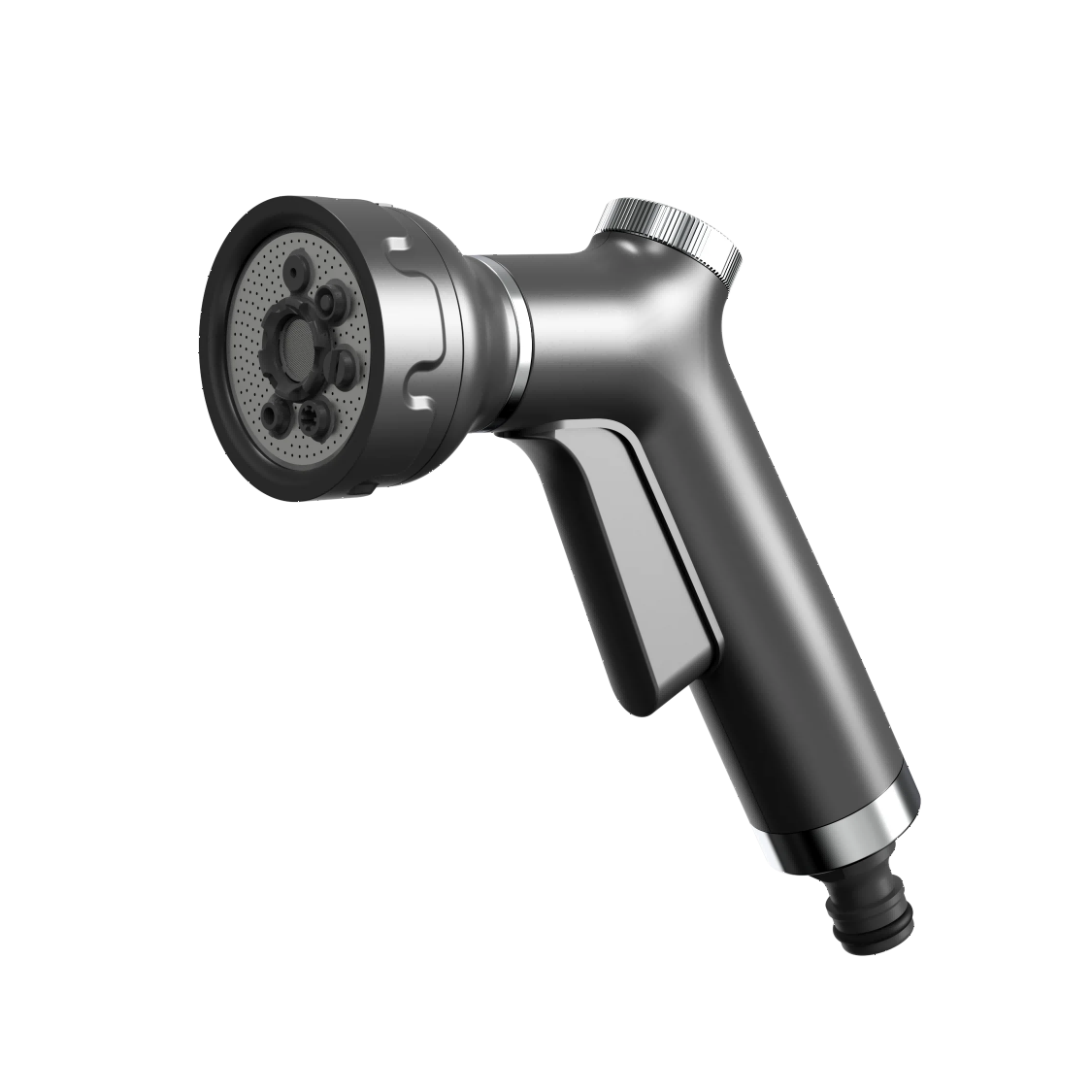
Consumer garden nozzles balance performance versatility with ease of use, requiring manufacturing approaches that deliver reliable functionality at accessible price points. A thoughtful spray nozzle manufacturer designs these products with ergonomic grip geometries, intuitive pattern selection mechanisms, and flow control features that accommodate users with varying strength and dexterity levels. Material choices emphasize impact resistance to withstand drops onto hard surfaces, while internal components utilize corrosion-resistant metals or durable polymers that maintain smooth operation through repeated cycles. The integration of multiple spray patterns within a single nozzle body reflects sophisticated internal design that compartmentalizes flow paths and seals to prevent cross-contamination or leakage.
Quality validation for consumer products includes drop testing, trigger cycle endurance, and connection thread durability assessments that simulate years of typical use. Packaging and instruction materials communicate proper installation procedures, winterization requirements, and pattern selection guidance that enhance user satisfaction and reduce return rates. For retail buyers, the reputation of the spray nozzle manufacturer influences purchasing decisions, with established brands offering warranty support and customer service infrastructure that commodity imports lack. The balance between cost competitiveness and quality assurance determines market positioning and long-term brand viability in the residential garden equipment sector.
Professional Landscape Irrigation Components
Commercial landscaping and turf management applications require irrigation nozzles with precise flow rates, uniform distribution patterns, and weather-resistant construction. Professional-grade products from a specialized spray nozzle manufacturer incorporate features such as pressure-compensating mechanisms, adjustable arc settings, and matched precipitation rates that facilitate system design and water budget compliance. Material specifications emphasize UV stability, freeze-thaw durability, and resistance to common fertilizers and soil amendments. Connection standards conform to industry norms for threading, barb sizing, or quick-couple interfaces that ensure compatibility with existing irrigation infrastructure.
Performance documentation includes distribution uniformity coefficients, application rate tables, and wind drift characteristics that irrigation designers use to optimize head spacing and zone configuration. Field adjustability features allow fine-tuning of coverage patterns to accommodate landscape plantings, hardscape elements, and property boundaries without requiring component replacement. For landscape contractors and property managers, the availability of technical support, replacement parts inventories, and application training from the spray nozzle manufacturer adds value beyond the initial product purchase. Long-term maintenance costs and system reliability improvements justify premium pricing for professionally engineered irrigation components compared to consumer-grade alternatives.
Specialty Garden Watering Applications
Niche applications such as greenhouse misting, drip irrigation manifolds, and pest control spraying require specialized nozzle designs that address unique distribution requirements. A versatile spray nozzle manufacturer maintains engineering capabilities to develop custom solutions or adapt standard products to meet specific application parameters. Low-flow misting nozzles utilize precision orifices and anti-drip valves to maintain uniform droplet size distributions that support humidity control without leaf wetting. Drip irrigation components incorporate pressure-compensating features and particulate filters that ensure consistent emitter output across varying terrain elevations and supply line lengths.
Application-specific testing protocols verify performance under realistic operating conditions, including water quality variations, temperature extremes, and installation orientations. Manufacturers providing comprehensive product lines enable system designers to source compatible components from a single supplier, simplifying procurement and ensuring dimensional interchangeability. Technical literature addressing installation best practices, troubleshooting procedures, and seasonal maintenance requirements supports successful implementation and long-term satisfaction. For specialty horticulture operations and hobby gardeners pursuing advanced cultivation techniques, access to engineered spray solutions from a knowledgeable spray nozzle manufacturer expands the range of achievable outcomes and system sophistication levels.
Selecting the Right Manufacturing Partner
Evaluating Production Capabilities and Certifications
Prospective buyers assessing potential suppliers should investigate manufacturing facility capabilities, quality management systems, and third-party certifications that indicate process maturity. Site visits or virtual facility tours reveal equipment investments, cleanliness standards, and organizational discipline that correlate with product quality consistency. ISO 9001 certification demonstrates documented procedures for design control, process monitoring, and corrective action implementation, while industry-specific certifications address sector requirements. A credible spray nozzle manufacturer maintains calibration records for measurement equipment, conducts regular internal audits, and participates in continuous improvement initiatives that enhance operational performance.
Production capacity assessments should consider lead times, minimum order quantities, and scalability to accommodate demand fluctuations. Manufacturers with diversified customer bases and flexible scheduling systems better manage supply continuity during raw material shortages or peak demand periods. The availability of value-added services such as custom packaging, private labeling, or kitting operations may influence sourcing decisions for distributors and retailers. Financial stability indicators including years in operation, ownership structure, and capital investment patterns provide insight into long-term partnership viability and risk exposure.
Technical Support and Application Engineering Resources
The quality of pre-sales and post-sales technical support differentiates strategic manufacturing partners from transactional component suppliers. A customer-focused spray nozzle manufacturer employs application engineers who understand hydraulic principles, system design methodologies, and field installation considerations. These resources assist with product selection, performance predictions, and troubleshooting guidance that accelerate project timelines and reduce implementation risks. Access to computational modeling tools, test equipment, and field validation capabilities enables collaborative problem-solving that addresses complex application challenges.
Training programs, installation workshops, and technical seminars offered by manufacturers transfer knowledge to distributor sales teams, contractor personnel, and end users. This educational investment improves product specification accuracy, reduces misapplication incidents, and enhances customer satisfaction across the supply chain. For buyers prioritizing long-term operational success over initial purchase price, the value of comprehensive technical support justifies partnerships with manufacturers demonstrating commitment to customer enablement. Responsive communication channels, documented escalation procedures, and warranty claim resolution processes reflect customer service philosophies that distinguish quality suppliers in competitive markets.
Customization Capabilities and Product Development Services
Applications with unique requirements benefit from manufacturers offering custom nozzle design and prototype development services. Engineering teams capable of translating performance specifications into manufacturable designs enable innovation in emerging market segments and specialized industrial processes. The product development cycle typically includes concept evaluation, computational modeling, prototype fabrication, and validation testing before committing to production tooling investments. A collaborative spray nozzle manufacturer engages customers throughout this process, incorporating feedback and refining designs to optimize performance and manufacturability.
Intellectual property considerations, confidentiality agreements, and tooling ownership terms require clear documentation to protect both parties' interests during custom development projects. Manufacturers with experience navigating these commercial arrangements facilitate smoother project execution and reduce potential disputes. The ability to scale from prototype quantities to full production volumes without compromising quality or delivery timelines demonstrates manufacturing agility and process robustness. For original equipment manufacturers and systems integrators, partnerships with development-capable spray nozzle manufacturers accelerate time-to-market and enhance competitive differentiation through proprietary component integration.
FAQ
What distinguishes a precision spray nozzle manufacturer from standard component suppliers?
Precision manufacturers invest in advanced machining equipment, implement statistical process controls, and conduct comprehensive performance testing to ensure consistent dimensional accuracy and hydraulic characteristics across production batches. These capabilities enable delivery of nozzles with predictable flow rates, spray patterns, and durability that meet demanding industrial specifications or provide reliable garden watering performance. Standard suppliers often lack the quality infrastructure and technical expertise required to guarantee micron-level tolerances and application-specific performance validation.
How do material choices impact spray nozzle performance in different applications?
Material selection affects chemical compatibility, abrasion resistance, thermal stability, and service life. Industrial applications involving corrosive fluids require stainless steel or specialized alloys, while high-pressure cleaning benefits from hardened materials that resist erosive wear. Garden nozzles utilize UV-stabilized polymers and corrosion-resistant metals to withstand outdoor exposure and chlorinated water. A knowledgeable spray nozzle manufacturer matches material properties to application demands, ensuring optimal performance and longevity while managing cost considerations.
What technical documentation should buyers expect from a professional spray nozzle manufacturer?
Comprehensive documentation includes dimensional drawings, material certifications, flow rate curves, spray pattern diagrams, and pressure-performance relationships. Industrial applications may require additional data such as droplet size distributions, chemical compatibility charts, and compliance certificates for relevant industry standards. Installation instructions, maintenance guidelines, and troubleshooting resources support successful implementation and long-term operational effectiveness. This documentation demonstrates engineering rigor and facilitates informed product selection and system design.
Can a single manufacturer serve both industrial and garden application requirements effectively?
Yes, manufacturers with diverse engineering capabilities and flexible production systems successfully serve multiple market segments by applying core competencies across different product lines. The hydraulic principles, material science knowledge, and precision manufacturing techniques transfer between industrial and garden applications, though product designs, quality standards, and distribution channels differ. A versatile spray nozzle manufacturer tailors offerings to meet segment-specific requirements while leveraging shared infrastructure and technical expertise to maintain competitive cost structures and consistent quality standards across product portfolios.
Table of Contents
- Engineering Capabilities That Define Precision Manufacturing
- Industrial Application Requirements and Manufacturing Standards
- Garden and Landscape Irrigation Engineering
- Selecting the Right Manufacturing Partner
-
FAQ
- What distinguishes a precision spray nozzle manufacturer from standard component suppliers?
- How do material choices impact spray nozzle performance in different applications?
- What technical documentation should buyers expect from a professional spray nozzle manufacturer?
- Can a single manufacturer serve both industrial and garden application requirements effectively?
