
When sourcing irrigation equipment for large-scale agricultural operations, municipal landscaping projects, or commercial facility maintenance, understanding how to evaluate sprinkler durability becomes a critical procurement skill. Unlike consumer-grade products where replacement is simple and costs are minimal, B2B buyers must consider long-term operational reliability, maintenance overhead, and total cost of ownership across potentially hundreds or thousands of units. The consequences of poor durability evaluation extend beyond product failure—they cascade into operational downtime, emergency procurement costs, labor-intensive replacement cycles, and potential damage to client relationships when irrigation systems fail during critical growth periods.
This comprehensive guide provides procurement professionals, facility managers, and agricultural operation directors with a systematic framework for assessing sprinkler durability before finalizing supplier contracts. By examining material specifications, engineering design principles, environmental stress factors, and validation methodologies, you will gain the analytical tools necessary to differentiate between superficially similar products and identify irrigation solutions that deliver consistent performance across extended operational lifecycles. The evaluation process requires balancing technical specifications against real-world application conditions, supplier transparency, and verifiable performance data rather than relying solely on marketing claims or initial purchase price.
Understanding Material Composition and Structural Engineering
Primary Construction Materials and Longevity Correlation
The foundation of sprinkler durability lies in the materials used throughout the construction assembly. Professional-grade irrigation equipment typically employs engineering-grade polymers, brass, stainless steel, or zinc alloys in critical components. When evaluating material composition, procurement specialists should request detailed specifications that identify the exact polymer grades used—such as acrylonitrile butadiene styrene with UV stabilizers, impact-modified polypropylene, or glass-filled nylon compounds. These technical polymer designations indicate whether the manufacturer has engineered the product for extended outdoor exposure or simply used commodity plastics that degrade rapidly under ultraviolet radiation and temperature cycling.
Brass components, particularly in nozzle assemblies and connection points, significantly enhance sprinkler durability through superior corrosion resistance and dimensional stability under pressure fluctuations. However, not all brass formulations offer equivalent performance—procurement teams should verify whether suppliers use dezincification-resistant brass alloys or standard formulations that may experience selective leaching in certain water chemistries. The presence of precision-machined metal components in flow regulation mechanisms, pressure compensation devices, and bearing assemblies often distinguishes commercial-grade equipment from residential alternatives, directly impacting operational lifespan expectations from three to five years up to ten to fifteen years in demanding applications.
Engineering Design Features That Extend Operational Life
Beyond raw material selection, the engineering architecture fundamentally determines how well sprinkler systems withstand repetitive stress cycles, pressure surges, and mechanical wear. Evaluating sprinkler durability requires examining design elements such as reinforced stress points at connection interfaces, sealed bearing assemblies that exclude contaminants, and pressure-balanced internal chambers that minimize cavitation damage. Products engineered with redundant structural supports at pivot points, strain relief features where flexible components meet rigid housings, and progressive spring mechanisms that distribute load evenly demonstrate sophisticated engineering that translates directly into extended field reliability.
The internal flow path design also impacts durability through its influence on sediment accumulation and erosion patterns. Sprinkler systems with smooth internal transitions, appropriately sized filter screens, and self-flushing capabilities maintain consistent performance longer than designs with sharp corners, narrow passages, or stagnant zones where particulates collect. When conducting technical evaluations, request cross-sectional drawings or exploded assembly diagrams that reveal these internal design characteristics. Suppliers confident in their engineering typically provide detailed technical documentation, while those offering vague descriptions or refusing access to design specifications may be concealing cost-reduction compromises that undermine long-term durability.
Connection Integrity and Seal Performance Over Time
Connection failures represent one of the most common durability issues in irrigation systems, yet they often receive insufficient attention during procurement evaluation. The threaded connections, quick-coupling interfaces, and hose attachment points must maintain leak-free operation through thousands of connection cycles and years of environmental exposure. Assessing sprinkler durability at connection points involves examining thread design specifications—whether they follow recognized standards like NPT or BSP with proper tolerances—and the materials used for sealing surfaces. O-ring grooves should be precisely machined to retain seals without crushing or displacement, while threaded components should demonstrate resistance to cross-threading and galling.
The elastomeric seals themselves deserve careful scrutiny, as material degradation directly affects system integrity. High-performance seals employ compounds like ethylene propylene diene monomer rubber or fluoroelastomers that resist chemical degradation from fertilizers, maintain flexibility across temperature extremes, and withstand ozone exposure without cracking. Request documentation on seal material specifications, compression set resistance ratings, and temperature range certifications. Additionally, evaluate whether connection designs incorporate strain relief features, locking mechanisms, or reinforced attachment points that prevent mechanical separation under operational stresses. These seemingly minor design details substantially influence whether connections remain secure throughout the product's intended service life or require frequent maintenance interventions that increase total cost of ownership.
Environmental Stress Resistance and Application Suitability
Ultraviolet Radiation Degradation and Protective Measures
Continuous outdoor exposure subjects irrigation equipment to relentless ultraviolet radiation that breaks down polymer molecular chains, causing embrittlement, discoloration, and structural failure. When evaluating sprinkler durability for outdoor applications, understanding UV resistance becomes paramount. Manufacturers employ several strategies to combat photodegradation, including carbon black incorporation, UV-absorbing additives, and hindered amine light stabilizers that interrupt the degradation cascade. However, the effectiveness of these protective measures varies dramatically based on additive concentration, distribution uniformity, and compatibility with base polymer systems.
Procurement professionals should request accelerated weathering test results following recognized standards such as ASTM G154 or ISO 4892, which simulate years of outdoor exposure in compressed timeframes using controlled UV lamps and moisture cycling. Products demonstrating minimal property changes after 2,000 to 5,000 hours of accelerated exposure typically perform reliably for five to ten years in actual field conditions. Be wary of suppliers providing generic UV resistance claims without supporting test data or those referencing non-standardized testing protocols. Additionally, examine physical samples for color consistency throughout cross-sections—uniform pigmentation indicates thorough UV stabilizer incorporation, while surface-only coloration suggests inadequate protection that will fail once surface layers erode.
Temperature Cycling Resilience and Seasonal Performance
Irrigation equipment experiences significant temperature fluctuations both daily and seasonally, creating expansion and contraction cycles that stress material interfaces, connections, and moving components. Evaluating sprinkler durability requires understanding how products respond to temperature extremes relevant to your operational geography. Systems deployed in regions with winter freezing must withstand ice formation stresses, while those in desert climates face extreme heat that accelerates material degradation and can cause warping in inadequately stabilized components. Request operating temperature range specifications and verify they encompass your application extremes with appropriate safety margins.
Thermal cycling tests reveal how products respond to repeated temperature transitions, identifying potential failure modes like seal hardening, housing distortion, or spring constant changes that affect spray patterns. Quality manufacturers conduct testing across hundreds of cycles spanning their specified temperature range, documenting dimensional changes, leakage rates, and functional performance degradation. When reviewing sprinkler durability specifications, pay particular attention to glass transition temperatures for polymer components and thermal expansion coefficient matching at material interfaces. Mismatched expansion rates between adjoining components create internal stresses that manifest as premature cracking, separation, or seal displacement after extended service.
Chemical Resistance and Water Quality Compatibility
Water quality characteristics significantly impact sprinkler durability through corrosion mechanisms, mineral deposition, and chemical degradation of materials. Agricultural applications often involve fertilizer injection, requiring compatibility with acidic or alkaline solutions, while municipal water may contain chlorine, chloramines, or other treatment chemicals. Industrial process water applications might include cooling tower treatments, anti-scaling compounds, or specific pH adjustments. Comprehensive durability evaluation must address the specific water chemistry conditions your systems will encounter rather than assuming compatibility with idealized clean water.
Request chemical compatibility documentation that addresses your specific water conditions, including pH range tolerance, maximum chlorine concentration, and resistance to common agricultural chemicals. Products intended for demanding applications should demonstrate stability when exposed to fertilizer solutions with pH values ranging from 4 to 9, chlorine concentrations up to 10 parts per million, and various dissolved mineral profiles. Hard water environments require particular attention to scaling potential in narrow passages and nozzle orifices—designs incorporating larger flow paths, smooth internal surfaces, and accessible cleaning points maintain performance longer in mineral-rich water. Additionally, evaluate whether internal components use dissimilar metals that might create galvanic corrosion cells, particularly in connection threads or valve assemblies where electrolyte presence facilitates electrochemical deterioration.
Performance Validation and Testing Methodologies
Pressure Cycling and Fatigue Life Assessment
Irrigation systems experience repetitive pressure cycles as zones activate and deactivate, pumps start and stop, or line pressures fluctuate with demand changes across distribution networks. These pressure variations create fatigue stresses in housing walls, connection threads, and seal interfaces that eventually lead to failure through crack propagation or gradual deformation. Evaluating sprinkler durability requires understanding how products respond to thousands of pressure cycles rather than just static pressure ratings. A sprinkler rated for 80 psi static pressure may fail prematurely if subjected to daily cycling between 10 and 75 psi, as cyclic loading accelerates fatigue damage.
Quality manufacturers conduct pressure cycling tests that simulate years of operational patterns, documenting cycle counts to failure or performance degradation. Industry-leading products demonstrate reliability through 50,000 to 100,000 pressure cycles without leakage or structural compromise, translating to decades of reliable field service in typical applications. When reviewing supplier documentation, examine whether pressure cycling tests use realistic pressure ranges and cycle frequencies rather than arbitrary laboratory protocols. Additionally, inquire about failure mode analysis from testing—understanding whether products fail through gradual degradation or catastrophic rupture helps assess field reliability and maintenance planning requirements. Products that exhibit graceful degradation with advance warning signs offer operational advantages over those prone to sudden, unpredictable failures.
Flow Rate Stability and Nozzle Erosion Resistance
Maintaining consistent flow rates and spray patterns throughout extended service life distinguishes durable professional equipment from products that experience rapid performance degradation. Nozzle orifices and internal flow regulation components face continuous erosion from water-borne particulates, even in filtered systems. The gradual enlargement of precision orifices increases flow rates, alters spray patterns, and reduces distribution uniformity across irrigated areas. When assessing sprinkler durability, request documentation on flow rate stability over operational lifetime, typically measured as percentage change after specified operating hours or volume throughput.
High-durability products incorporate erosion-resistant materials like hardened stainless steel, ceramic, or specialized alloys in critical flow control components. These materials maintain dimensional precision far longer than brass or polymer alternatives in high-velocity flow regions. Accelerated erosion testing using water with controlled particulate loading reveals how quickly flow characteristics degrade—quality products demonstrate less than five percent flow rate change after simulated multi-year operation. Beyond material selection, design approaches that reduce flow velocities through appropriately sized passages, eliminate sharp direction changes, and distribute wear across larger surface areas extend nozzle life substantially. Evaluate whether suppliers provide replacement nozzle components or rebuild kits, indicating confidence in long-term product support and acknowledgment that certain wear components may require eventual service.
Mechanical Wear Testing for Moving Components
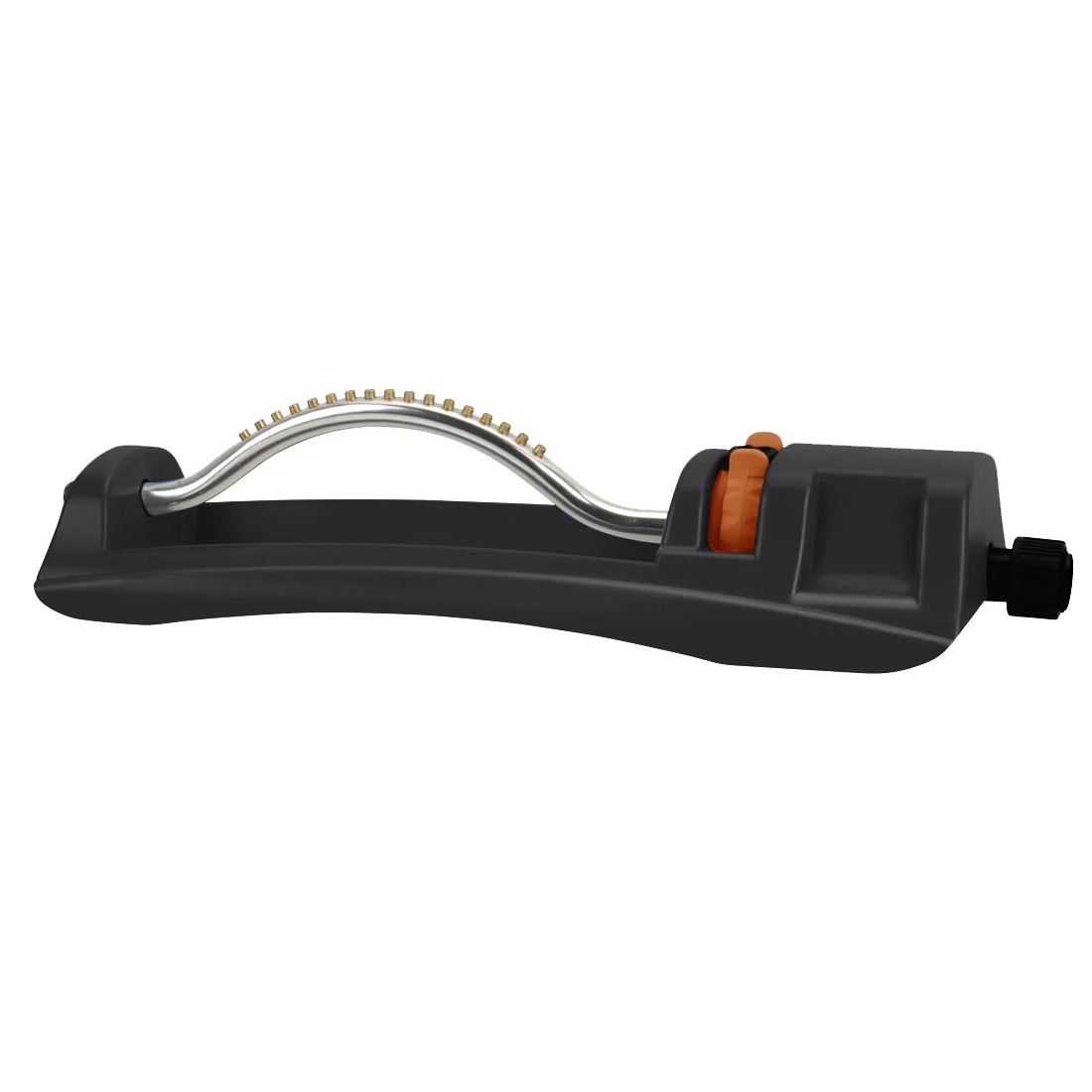
Sprinkler systems incorporating oscillating mechanisms, rotating heads, or adjustable spray patterns contain moving components subject to wear from repeated motion cycles. Bearings, gears, springs, and pivot assemblies gradually degrade through friction, contamination intrusion, and lubrication breakdown. Comprehensive sprinkler durability evaluation must address mechanical wear resistance through documentation of cycle life testing, bearing material specifications, and seal effectiveness in excluding contaminants. Oscillating sprinklers, for example, should complete millions of sweep cycles without excessive play development, binding, or pattern irregularity.
Request detailed information on bearing types—whether products use sleeve bearings, ball bearings, or specialized low-friction materials—and lubrication approaches. Sealed bearings pre-packed with appropriate lubricants generally outlast designs relying on occasional user maintenance or those lacking effective sealing against dust and debris infiltration. Spring mechanisms should employ corrosion-resistant materials with documented cycle life ratings, while gear assemblies should demonstrate adequate tooth strength and wear resistance. When possible, request samples for extended operational testing under your specific conditions before finalizing large procurement contracts. Real-world validation under actual application stresses provides confidence that theoretical specifications translate to practical durability.
Supplier Qualification and Documentation Requirements
Manufacturing Quality Systems and Process Control
The consistency and reliability of sprinkler durability directly correlate with manufacturing quality management systems. Suppliers operating certified quality systems following ISO 9001 standards or industry-specific certifications demonstrate commitment to process control, documentation, and continuous improvement. During supplier evaluation, request information on quality certifications, manufacturing process documentation, and statistical process control implementations. Companies employing automated inspection systems, dimensional verification at critical stages, and documented corrective action procedures for nonconformances produce more consistent products than those relying solely on final inspection or sampling approaches.
Visit manufacturing facilities when feasible to observe production processes, material handling practices, and quality verification procedures firsthand. Evaluate whether incoming materials receive inspection before production use, whether assembly processes include torque verification for threaded connections, and whether finished products undergo functional testing before shipment. Manufacturers with robust quality systems maintain traceability from raw materials through final products, enabling investigation of field failures and implementation of targeted improvements. Request access to quality metrics such as first-pass yield rates, customer return rates, and field failure data. Transparent suppliers confident in their products willingly share performance data, while evasive responses or refusal to provide quality metrics should raise concerns about actual product reliability.
Technical Documentation and Engineering Support
Comprehensive technical documentation indicates engineering rigor and provides essential information for evaluating sprinkler durability claims. Complete product documentation includes detailed dimensional drawings, material specifications with grade callouts, operating parameter limits, maintenance requirements, and expected service life under defined conditions. Procurement specifications should require suppliers to provide installation instructions, maintenance schedules, troubleshooting guides, and exploded parts diagrams. The availability of replacement components and technical support throughout the product lifecycle significantly impacts total cost of ownership and operational reliability.
Evaluate supplier engineering capabilities by examining the depth and accuracy of provided documentation. Generic specification sheets with limited technical detail suggest products designed primarily for cost competition rather than performance optimization. Conversely, comprehensive documentation including finite element analysis results, fluid dynamics modeling, and detailed material property data indicates engineering investment in product development. Request access to technical support personnel during the evaluation phase—responsive, knowledgeable engineering support capable of addressing application-specific questions demonstrates organizational commitment to customer success beyond initial product sale. Suppliers offering application engineering assistance, site-specific recommendations, and post-installation support provide greater value than those treating procurement as purely transactional.
Warranty Coverage and Field Performance History
Warranty terms reflect manufacturer confidence in sprinkler durability and provide financial protection against premature failures. However, warranty evaluation requires examining coverage details beyond simple duration claims. Comprehensive warranties cover both materials and workmanship, include reasonable labor allowances for replacement, and feature straightforward claim procedures without excessive exclusions. Be cautious of warranties with numerous conditions, limited coverage of specific components, or requirements for unverifiable maintenance procedures that manufacturers might use to deny legitimate claims.
Request references from existing customers operating similar applications, particularly those with multi-year operational history. Direct feedback from facility managers or agricultural operations using the same equipment under comparable conditions provides invaluable insights into real-world durability, maintenance requirements, and supplier responsiveness to issues. When contacting references, ask specific questions about failure rates, common maintenance needs, actual service life achieved, and overall satisfaction with durability relative to initial expectations. Patterns emerging across multiple reference contacts—whether positive or negative—provide more reliable indicators of product performance than manufacturer claims or isolated testimonials. Additionally, research independent testing results, agricultural extension service evaluations, or industry publication reviews that provide unbiased assessments of sprinkler durability across different brands and models.
Total Cost of Ownership Analysis and Procurement Decision Framework
Lifecycle Cost Modeling Beyond Initial Purchase Price
Effective evaluation of sprinkler durability requires analyzing total cost of ownership rather than focusing exclusively on initial purchase price. Products with lower acquisition costs frequently generate higher lifecycle expenses through increased maintenance requirements, shorter replacement cycles, and operational disruptions. Comprehensive cost modeling should incorporate initial equipment cost, installation labor, expected service life, maintenance frequency and costs, replacement intervals, and operational efficiency impacts. A sprinkler system costing fifty percent more initially but delivering twice the service life with minimal maintenance represents superior value despite higher upfront investment.
Develop standardized cost comparison spreadsheets that normalize competing products to equivalent operational periods, typically ten to fifteen years for commercial irrigation equipment. Include realistic estimates for maintenance labor rates, replacement part costs, and system downtime expenses. Factor in operational efficiency differences—products maintaining consistent flow rates and spray patterns throughout their service life deliver better irrigation uniformity and resource efficiency than those experiencing gradual degradation. In agricultural applications, improved irrigation uniformity directly translates to yield increases, water conservation, and reduced fertilizer waste. Quantifying these operational benefits alongside maintenance cost differences often reveals that higher-durability products deliver substantially better return on investment despite premium initial pricing.
Risk Assessment and Operational Continuity Considerations
Beyond direct financial costs, sprinkler durability impacts operational risk and continuity assurance. Irrigation system failures during critical periods—such as establishment phases for new plantings, peak summer heat periods, or production schedules for time-sensitive crops—create consequences extending far beyond equipment replacement costs. Risk-adjusted procurement decisions weight reliability more heavily for applications where failures carry severe consequences. Evaluate sprinkler durability not just as expected service life but as failure probability distributions—products with predictable, gradual degradation enable proactive replacement scheduling, while those prone to sudden failures create operational uncertainties.
Consider developing tiered procurement strategies based on application criticality and failure consequence severity. Mission-critical systems supporting high-value crops, essential facility operations, or contractual obligations warrant investment in premium-durability products with proven reliability and comprehensive support. Secondary systems with lower failure consequences or redundant capacity may appropriately utilize mid-tier products balancing cost and durability. Documenting the rationale for durability requirements within procurement specifications ensures consistent decision-making across multiple projects and provides justification for premium product selection when necessary. Additionally, evaluate supplier stability and long-term viability—the most durable products deliver limited value if manufacturers cease operations, discontinue product lines, or fail to maintain parts availability throughout expected service life.
Specification Development and Vendor Communication
Translating durability evaluation criteria into effective procurement specifications requires precise technical language that clearly communicates requirements while remaining verifiable and enforceable. Specifications should define minimum acceptable standards for material grades, testing validation, environmental resistance, and performance stability rather than relying on subjective quality descriptors. Include specific requirements such as minimum UV accelerated aging test hours, pressure cycle counts, operating temperature ranges, and flow rate stability tolerances. Reference recognized industry standards wherever applicable to establish common understanding and enable objective compliance verification.
Effective specifications also address documentation requirements, quality system expectations, warranty terms, and technical support obligations. Clearly state that suppliers must provide detailed material specifications, test reports, quality certifications, and technical drawings as part of their proposals. Establish evaluation criteria weightings that appropriately balance initial cost against durability factors, service life expectations, and total cost of ownership projections. Communicate specification rationale to potential suppliers, explaining the application conditions, performance expectations, and business drivers behind durability requirements. Suppliers understanding your operational context can recommend appropriate products, suggest specification refinements, or identify potential misalignments between requirements and product capabilities before contract execution. This collaborative approach identifies optimal solutions while establishing clear performance expectations that reduce disputes and disappointment after installation.
FAQ
What documentation should I request when evaluating sprinkler durability for commercial procurement?
Request comprehensive technical specifications including material grade callouts for all components, dimensional drawings, operating parameter limits, and maintenance requirements. Essential documentation includes accelerated UV aging test results following ASTM G154 or ISO 4892 standards, pressure cycling test data showing performance through at least 50,000 cycles, chemical compatibility charts for your specific water conditions, and temperature range certifications. Additionally, obtain quality system certifications, warranty documentation with full terms and conditions, installation instructions, parts diagrams, and technical support contact information. Suppliers confident in their products readily provide detailed documentation, while reluctance to share specifications often indicates quality concerns or products unsuitable for demanding commercial applications.
How do I distinguish between marketing claims and actual durability performance?
Focus on verifiable data rather than subjective claims by requesting third-party test results following recognized standards, field performance data from existing installations, and customer references operating similar applications. Examine whether durability claims include specific metrics like service life in operating hours, cycle counts to failure, or quantified degradation rates rather than vague quality assertions. Contact reference customers directly to discuss actual field performance, maintenance requirements, and failure experiences. Independent testing results from agricultural extension services, industry publications, or certification bodies provide unbiased assessments. Be skeptical of claims lacking supporting data, testimonials without verifiable sources, or comparisons to unspecified competing products. Legitimate high-durability products feature extensive documentation validating performance claims through objective testing and demonstrated field history.
What role does supplier reputation play in evaluating sprinkler durability?
Supplier reputation serves as a valuable indicator but should complement rather than replace objective technical evaluation. Established manufacturers with decades of market presence typically maintain consistent quality standards and provide better long-term parts availability and technical support than newer or unstable suppliers. However, reputation alone does not guarantee that specific products meet your durability requirements—even respected manufacturers offer product ranges spanning different quality tiers. Research supplier history regarding product recalls, warranty claim handling, customer service responsiveness, and engineering support quality. Membership in industry associations, adherence to quality standards, and transparent business practices indicate organizational commitment to customer satisfaction beyond initial sales. Balance reputation assessment with thorough technical evaluation, as some lesser-known manufacturers produce excellent products while certain established brands may trade on legacy reputation despite declining quality.
Should I conduct field testing before finalizing large-scale sprinkler procurement contracts?
Field testing under actual operating conditions provides invaluable validation that laboratory specifications translate to real-world durability, making pilot installations highly advisable before large-scale commitments. Deploy representative samples across your typical application conditions for at least one full season, monitoring performance, maintenance requirements, and any developing issues. Field testing reveals compatibility problems with your specific water chemistry, unexpected wear patterns from local environmental conditions, or installation challenges not apparent from technical specifications. Document flow rate stability, spray pattern consistency, connection integrity, and any component degradation throughout the test period. Compare multiple competing products side-by-side when feasible to directly assess relative durability. While field testing adds time and cost to procurement processes, the investment prevents costly mistakes when deploying hundreds or thousands of units, providing confidence that selected products will deliver expected performance throughout their intended service life in your specific operational context.
Table of Contents
- Understanding Material Composition and Structural Engineering
- Environmental Stress Resistance and Application Suitability
- Performance Validation and Testing Methodologies
- Supplier Qualification and Documentation Requirements
- Total Cost of Ownership Analysis and Procurement Decision Framework
-
FAQ
- What documentation should I request when evaluating sprinkler durability for commercial procurement?
- How do I distinguish between marketing claims and actual durability performance?
- What role does supplier reputation play in evaluating sprinkler durability?
- Should I conduct field testing before finalizing large-scale sprinkler procurement contracts?
