
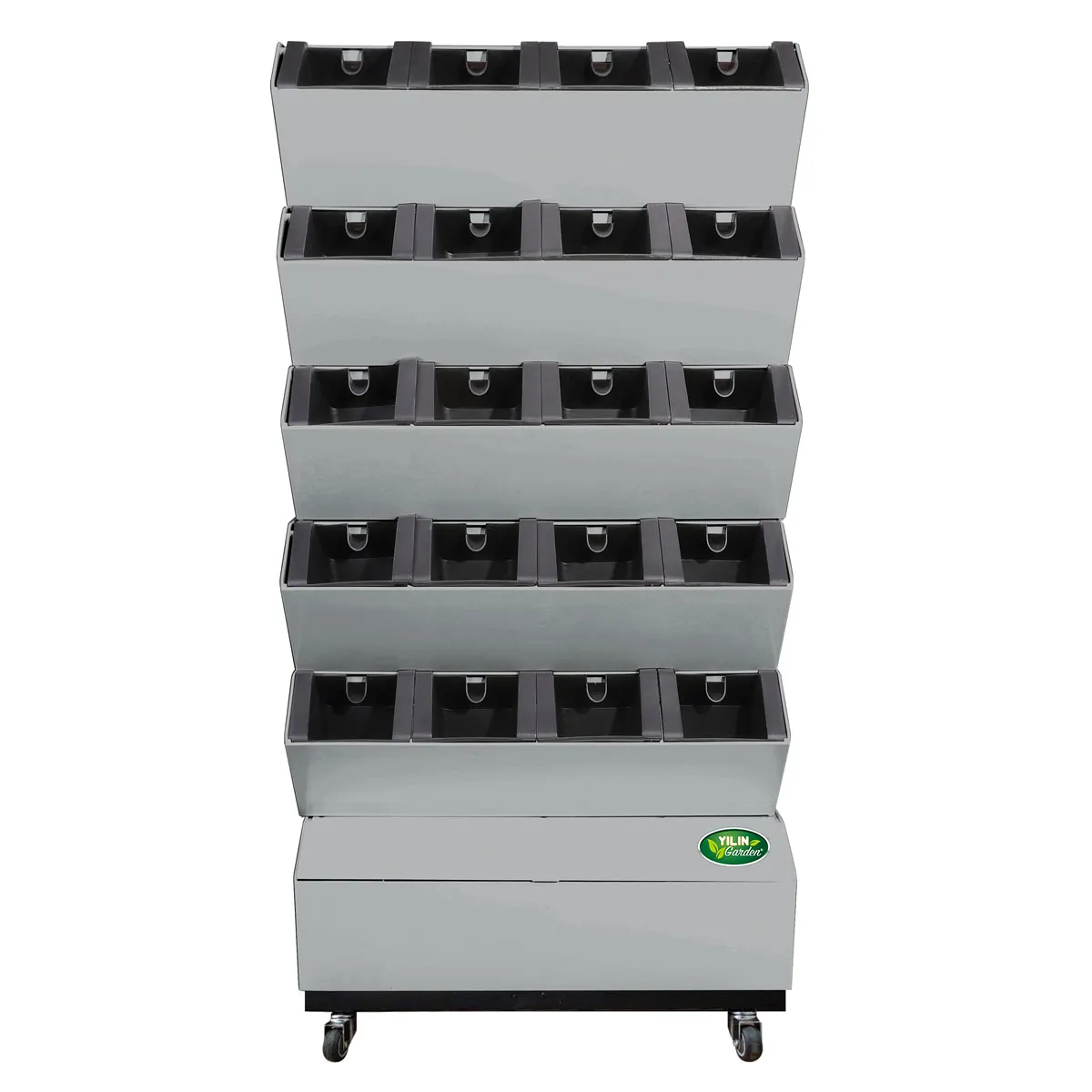
High-volume irrigation operations demand reliable, precision-engineered components that can withstand constant water flow, pressure variations, and environmental exposure. For agricultural enterprises, commercial growers, and landscape management firms managing extensive irrigation networks, sourcing components directly from specialized manufacturing facilities offers distinct advantages in quality control, cost efficiency, and technical customization. Factory-direct procurement of custom hose connector assemblies eliminates intermediary markups while providing access to engineering expertise that can tailor connector specifications to unique operational requirements. This purchasing approach becomes particularly valuable when irrigation systems operate at scale, where component failure translates directly into crop loss, operational downtime, and emergency replacement costs that far exceed the initial savings from generic retail alternatives.
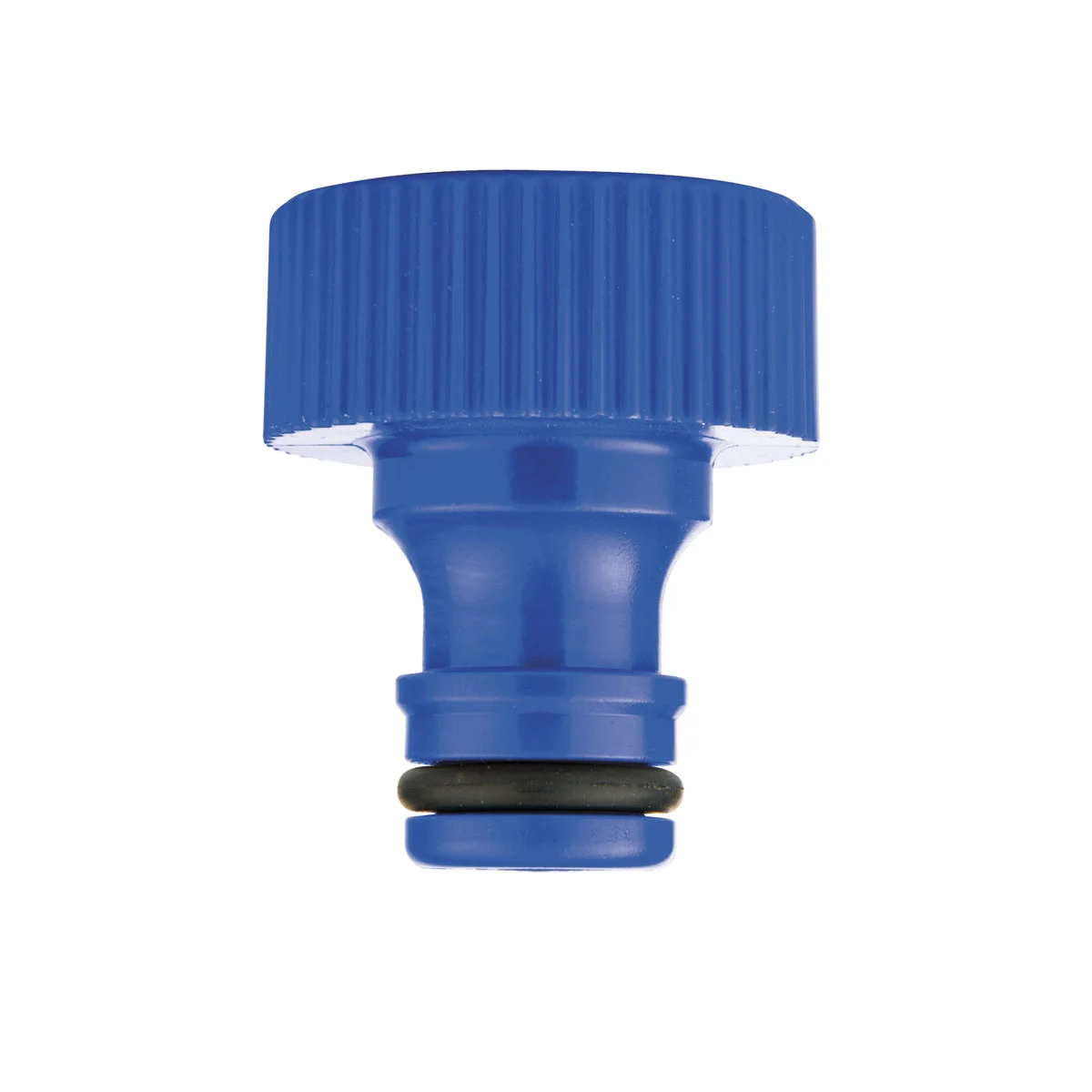
The decision to engage directly with manufacturing facilities for irrigation connectivity solutions represents a strategic shift from transactional purchasing toward partnership-based procurement. When irrigation volumes reach commercial thresholds, standardized retail connectors often prove inadequate for sustained performance under continuous duty cycles. Factory-direct relationships enable specification customization that addresses site-specific challenges such as non-standard thread configurations, chemical resistance requirements for fertilizer injection systems, or pressure ratings that exceed consumer-grade limitations. This article examines the technical, economic, and operational considerations that make factory-direct sourcing the preferred approach for organizations managing high-volume irrigation infrastructure, providing decision-makers with the analytical framework necessary to evaluate manufacturing partners and optimize their component procurement strategy.
Understanding Factory-Direct Procurement Advantages for Irrigation Components
Economic Benefits of Eliminating Distribution Layers
The traditional distribution model for irrigation components involves multiple intermediary stages between manufacturer and end user, with each layer adding margin to the final purchase price. Retail distributors typically apply markups ranging from thirty to sixty percent above wholesale acquisition costs, while wholesalers themselves operate on margins that inflate manufacturer pricing by twenty to forty percent. For high-volume irrigation operations purchasing connectors in quantities measured in hundreds or thousands of units, these cumulative markups represent substantial expenditure that provides no functional value to the irrigation system itself. Factory-direct procurement collapses this distribution chain, enabling purchasers to acquire components at pricing that reflects manufacturing costs plus a single reasonable profit margin rather than layered intermediary fees.
Beyond initial purchase price advantages, factory-direct relationships often provide access to volume-based pricing structures that reward commitment and scale. Manufacturing facilities operating with predictable order volumes can optimize production scheduling, material procurement, and inventory management in ways that generate cost efficiencies they can share with direct customers. For irrigation operations with seasonal purchasing patterns or multi-year infrastructure development plans, negotiating direct contracts with manufacturing facilities creates opportunities for price stabilization that protects against market volatility affecting retail channels. This pricing predictability becomes a significant operational advantage when budgeting for large-scale irrigation expansion or system modernization projects where component costs represent a substantial portion of total capital investment.
Quality Control and Manufacturing Transparency
Purchasing irrigation components through retail channels inherently limits visibility into manufacturing processes, material specifications, and quality control protocols. Generic hose connector products available through distribution networks rarely provide detailed information about polymer composition, pressure testing methodologies, or failure rate statistics that inform reliability predictions. Factory-direct relationships transform this opacity into transparency, enabling purchasers to conduct facility audits, review quality documentation, and understand the specific manufacturing standards governing component production. For irrigation systems where connector failure can result in water waste, crop stress, or system contamination, this visibility into manufacturing quality becomes a critical risk management tool.
Direct engagement with manufacturing facilities also creates opportunities for specification verification that retail channels cannot provide. When sourcing hose connector assemblies for irrigation applications involving specific pressure ranges, temperature extremes, or chemical exposure from fertilizers and treatments, purchasers need assurance that components meet stated specifications under actual operating conditions. Manufacturing facilities can provide material certifications, pressure test data, and accelerated aging results that substantiate performance claims, while also offering custom testing protocols that simulate the purchaser's specific operational environment. This technical validation capability proves particularly valuable for irrigation operations in regulated industries such as food production, where component failure could compromise product safety certifications or trigger regulatory compliance issues.
Customization Capabilities for Specialized Requirements
High-volume irrigation systems frequently encounter connectivity challenges that standardized retail products cannot adequately address. Thread incompatibilities between equipment from different manufacturers, non-standard pipe dimensions in legacy infrastructure, or unique mounting requirements in specialized growing environments often necessitate custom hose connector solutions. Manufacturing facilities with direct customer relationships can engineer custom components that solve these specific problems, whereas retail distribution channels offer only the limited product range that generates sufficient volume to justify inventory investment. This customization capability becomes essential when retrofitting existing irrigation systems or integrating new technology into established infrastructure where complete system replacement proves economically impractical.
The ability to specify custom features extends beyond dimensional requirements to include functional enhancements that improve operational efficiency. Manufacturing partners can incorporate features such as color-coded identification for different water sources, integrated shut-off mechanisms that simplify maintenance procedures, or quick-disconnect designs that reduce labor requirements during seasonal system changes. For large irrigation operations where labor efficiency directly impacts profitability, these custom functional improvements deliver ongoing operational value that justifies the modest engineering investment required for custom tooling. Factory-direct relationships make these customization options economically accessible at order volumes that would be considered specialty or prototype runs in retail distribution contexts.
Technical Specifications Critical for High-Volume Irrigation Applications
Pressure Rating Requirements and Safety Margins
Irrigation systems serving large agricultural or landscape areas typically operate at pressures ranging from forty to one hundred pounds per square inch, with pressure variations occurring during pump startup, zone switching, and demand fluctuations. Selecting hose connector components with appropriate pressure ratings requires understanding not just nominal operating pressure but also transient pressure spikes that can exceed steady-state conditions by fifty percent or more. Manufacturing facilities producing connectors for irrigation applications engineer pressure ratings that incorporate safety margins accounting for these transients, whereas generic retail products may specify only nominal ratings that prove inadequate under actual field conditions. Direct engagement with manufacturers enables detailed discussion of pressure profiles and selection of components engineered for the purchaser's specific hydraulic environment.
Pressure rating specifications must also account for the degradation effects of environmental exposure and chemical contact over extended service life. Ultraviolet radiation exposure degrades polymer materials, reducing burst strength by twenty to thirty percent over multi-year outdoor exposure periods. Contact with fertilizer solutions, particularly those containing ammonia or acidic components, can accelerate material degradation through chemical attack mechanisms. Manufacturing facilities specializing in irrigation components understand these degradation pathways and engineer hose connector designs with initial pressure ratings that maintain adequate safety margins throughout expected service life. This forward-looking design approach contrasts with generic products engineered for indoor or intermittent use that may meet initial specifications but fail prematurely under continuous outdoor irrigation duty cycles.
Material Selection for Chemical Compatibility
Modern irrigation practices increasingly incorporate fertigation and chemigation techniques that introduce agricultural chemicals directly into irrigation water. This practice exposes hose connector components to a complex chemical environment that can attack materials not specifically selected for compatibility. Brass connectors, widely used in residential applications, can experience dezincification when exposed to certain fertilizer formulations, leading to brittle failure modes that occur without visible warning. Polymer-based hose connector components must resist both the primary agricultural chemicals used in irrigation water and the synergistic effects that occur when multiple chemical species interact in the presence of elevated temperatures and sunlight exposure.
Manufacturing facilities serving agricultural irrigation markets maintain material compatibility databases that document the resistance of their connector materials to specific chemical formulations. These databases, developed through accelerated aging tests and field failure analysis, enable precise material selection for purchasers' specific chemical injection programs. For irrigation operations using proprietary fertilizer blends or specialty treatments, manufacturing partners can conduct custom compatibility testing that provides definitive guidance on material selection. This technical support capability, unavailable through retail channels, prevents costly field failures that occur when incompatible materials are unknowingly introduced into chemically aggressive irrigation environments. The ability to specify hose connector materials based on documented chemical compatibility represents a significant risk reduction benefit of factory-direct procurement relationships.
Thread Standards and Connection Reliability
Thread compatibility issues represent a persistent challenge in irrigation system assembly, particularly when integrating components from different manufacturers or different national markets. Garden hose thread standards vary between North American and European markets, while irrigation-specific thread forms such as pipe threads and specialty quick-connect systems add further complexity. Retail hose connector products typically conform to the predominant standard in their target market, offering limited accommodation for the thread variations that arise in complex irrigation systems. Manufacturing facilities with direct customer relationships can produce connectors with custom thread forms that bridge compatibility gaps, or provide adapters engineered specifically for the thread combinations present in the purchaser's infrastructure.
Beyond dimensional compatibility, thread quality critically affects connection reliability and leak prevention. Poorly formed threads create stress concentrations that initiate crack propagation, particularly in polymer materials operating under continuous pressure. Thread engagement depth, pitch accuracy, and surface finish all influence the mechanical integrity of threaded hose connector joints. Manufacturing facilities employing precision molding or machining processes produce threads with dimensional consistency that ensures reliable engagement and uniform stress distribution. For high-volume irrigation systems where connection integrity directly affects water conservation and operational efficiency, the superior thread quality available from specialized manufacturing facilities justifies their selection over generic retail alternatives that prioritize cost minimization over precision manufacturing.
Evaluating Manufacturing Partners for Direct Procurement
Production Capacity and Supply Chain Reliability
Assessing a manufacturing facility's ability to consistently supply required volumes represents a critical evaluation criterion for irrigation operations considering factory-direct procurement. Production capacity must accommodate not just typical order quantities but also seasonal demand peaks and emergency replacement needs that arise from unexpected failures. Manufacturing facilities with single production lines or limited equipment redundancy present supply chain risks when that equipment experiences downtime or when competing orders consume available capacity. Irrigation purchasers should evaluate manufacturing partners based on installed production capacity, equipment redundancy, and historical delivery performance metrics that demonstrate reliable supply even during peak demand periods.
Supply chain reliability extends beyond the manufacturing facility itself to include upstream material suppliers and logistics partners. Disruptions in raw material supply or transportation constraints can impair delivery performance regardless of the manufacturer's internal capabilities. Evaluating potential manufacturing partners should include assessment of their material sourcing strategies, inventory policies, and logistics relationships. Manufacturing facilities maintaining strategic raw material inventories and relationships with multiple logistics providers demonstrate supply chain resilience that protects purchasers from disruptions. For irrigation operations where connector availability directly determines whether planting schedules, harvest timing, or maintenance windows can be met, this supply chain reliability becomes as important as the technical specifications of the hose connector products themselves.
Quality Management Systems and Documentation
Professional manufacturing operations implement formal quality management systems that document specifications, control production processes, and verify product conformance through systematic testing protocols. ISO 9001 certification, while not guaranteeing product quality, indicates that a manufacturing facility operates according to documented procedures with traceability and continuous improvement mechanisms. For irrigation purchasers sourcing components at commercial scale, partnering with manufacturers operating certified quality systems reduces the risk of receiving non-conforming products and provides recourse mechanisms when quality issues do arise. The documentation generated by these quality systems enables root cause analysis when failures occur, supporting corrective actions that prevent recurrence.
Beyond formal certifications, evaluating a manufacturing partner's quality culture requires examination of their testing protocols and failure analysis capabilities. Manufacturing facilities that routinely conduct pressure testing, accelerated aging studies, and dimensional verification demonstrate commitment to product quality that extends beyond minimum specification compliance. Facilities with in-house testing laboratories and engineering staff capable of investigating field failures provide technical partnership value that transcends the transaction of purchasing hose connector components. For irrigation operations managing infrastructure investments measured in hundreds of thousands or millions of dollars, partnering with manufacturing facilities that view quality as competitive advantage rather than cost center significantly reduces long-term operational risk and total cost of ownership.
Engineering Support and Technical Collaboration
The technical complexity of high-volume irrigation systems often requires engineering expertise that extends beyond the hose connector components themselves to encompass system-level design considerations. Manufacturing partners offering application engineering support can assist with connector selection, system layout optimization, and troubleshooting operational challenges. This technical collaboration capability becomes particularly valuable during system expansion projects or modernization initiatives where connector selection interacts with pump capacity, pipe sizing, and hydraulic balancing. Manufacturing facilities employing application engineers with irrigation industry experience provide consultative value that generic retail suppliers cannot match, effectively functioning as extensions of the purchaser's engineering team.
Technical collaboration also facilitates continuous improvement of both products and applications. Manufacturing partners receptive to field performance feedback and willing to incorporate improvement suggestions into product development demonstrate the partnership orientation that drives long-term value creation. For irrigation operations encountering performance challenges or identifying opportunities for efficiency improvement, having direct access to manufacturing engineering resources accelerates problem resolution and innovation implementation. This collaborative relationship transforms hose connector procurement from a commodity transaction into a strategic partnership that continuously enhances irrigation system performance and operational efficiency.
Implementation Strategies for Factory-Direct Procurement Programs
Transitioning from Retail to Direct Sourcing
Shifting from established retail purchasing relationships to factory-direct procurement requires systematic planning that addresses inventory management, specification standardization, and purchasing process adaptation. Many irrigation operations maintain relationships with local suppliers who provide convenient access to replacement parts and emergency inventory, creating legitimate concerns about supply continuity during the transition to direct manufacturing relationships. Successful transitions typically employ phased approaches that initially focus on high-volume, predictable components while maintaining retail relationships for specialty items and emergency needs. This hybrid strategy allows irrigation operations to realize immediate cost benefits on major component categories while developing confidence in direct supply chain reliability before complete transition.
Specification standardization represents another critical transition element, as factory-direct procurement creates opportunities to rationalize component variety and reduce inventory complexity. Manufacturing partners can assist with specification review that identifies functionally equivalent alternatives to the diverse hose connector types that accumulate in irrigation systems developed over extended periods. Reducing component variety simplifies inventory management, improves volume concentration for better pricing, and reduces the likelihood of installation errors from using incorrect connectors. However, standardization initiatives require careful technical evaluation to ensure that simplified specifications actually meet all application requirements without compromising performance or creating compatibility issues. Manufacturing partners providing engineering support during this standardization process help irrigation operations achieve simplification benefits without introducing technical risks.
Inventory Planning and Buffer Stock Strategies
Factory-direct procurement typically involves longer lead times than retail purchasing, necessitating more sophisticated inventory planning to ensure component availability when needed. Irrigation operations must forecast seasonal demand patterns, account for expected failure rates based on installed base and component age, and establish buffer stock levels that protect against supply disruptions and demand variability. Manufacturing partners can support this planning process by providing historical delivery performance data, production scheduling visibility, and flexible ordering arrangements that accommodate demand uncertainty. For irrigation operations without established inventory planning capabilities, developing these competencies represents an investment requirement that should be factored into the economic analysis of transitioning to factory-direct procurement.
Buffer stock strategies must balance the cost of carrying inventory against the risk of stockouts during critical operational periods. For seasonal irrigation operations, establishing adequate inventory before growing seasons begins ensures component availability when replacement needs arise and when manufacturing lead times could delay repairs. Some manufacturing partners offer vendor-managed inventory programs or consignment arrangements that transfer inventory carrying costs back to the manufacturer while ensuring component availability at customer sites. These programs prove particularly attractive for irrigation operations with limited storage capacity or capital constraints that make large inventory investments problematic. Evaluating manufacturing partners should include assessment of their flexibility in structuring inventory and delivery arrangements that align with the purchaser's operational requirements and financial constraints.
Performance Monitoring and Continuous Improvement
Establishing factory-direct procurement relationships for hose connector components should include systematic performance monitoring that tracks both product quality and supply chain effectiveness. Documenting failure rates, failure modes, and service life statistics generates the empirical evidence needed to evaluate whether direct procurement delivers the anticipated quality and cost benefits. This performance data also provides the foundation for continuous improvement dialogue with manufacturing partners, identifying opportunities for design refinements, material upgrades, or process improvements that enhance long-term value. Manufacturing facilities committed to partnership relationships welcome this performance feedback and incorporate it into their product development and quality improvement initiatives.
Continuous improvement extends beyond product quality to encompass the entire procurement relationship, including ordering processes, delivery reliability, technical support responsiveness, and invoice accuracy. Regular business reviews with manufacturing partners provide forums for addressing operational friction points and identifying process improvements that benefit both parties. For irrigation operations managing multiple manufacturing relationships across different component categories, these structured review processes ensure that factory-direct procurement delivers sustained value rather than creating administrative burdens that offset cost savings. Successful direct procurement programs treat manufacturing relationships as strategic partnerships requiring ongoing attention and investment rather than transactional arrangements focused solely on unit price.
FAQ
What minimum order quantities typically apply to factory-direct hose connector purchases?
Minimum order quantities vary significantly among manufacturing facilities and depend on whether purchasers require standard catalog products or custom specifications. For standard hose connector designs, many manufacturers accept initial orders starting at one hundred to five hundred units, with lower per-unit pricing available at higher volumes typically beginning around one thousand units. Custom designs requiring dedicated tooling or non-standard materials generally require minimum commitments of several thousand units to justify engineering and setup costs. However, manufacturers serving irrigation markets often demonstrate flexibility in structuring initial orders and tooling amortization to accommodate relationship development, particularly for purchasers with credible volume projections and long-term partnership interest.
How do lead times for factory-direct orders compare to retail availability?
Factory-direct procurement typically involves lead times of four to eight weeks for standard products and eight to twelve weeks for custom designs, compared to immediate availability through retail channels. However, this comparison oversimplifies the practical reality for high-volume irrigation operations, which typically plan component purchases around seasonal requirements rather than immediate needs. Manufacturing facilities can often accommodate expedited production for premium charges when genuine emergencies arise, and some offer stocking programs that maintain agreed inventory levels for immediate shipment. For planned purchases aligned with seasonal demand cycles, the extended lead times associated with factory-direct procurement rarely constrain operations when proper planning processes are implemented.
What documentation should irrigation buyers request when evaluating manufacturing partners?
Comprehensive manufacturer evaluation should include requests for material certifications documenting polymer specifications or metal alloy composition, pressure test data showing burst and sustained pressure performance, dimensional inspection reports verifying conformance to specifications, and quality system certifications such as ISO 9001. Manufacturing facilities should also provide client references from similar irrigation applications, production capacity documentation showing equipment capabilities and redundancy, and sample supply agreements that clarify terms, warranties, and liability provisions. For custom hose connector designs, manufacturers should provide detailed drawings, material compatibility assessments for specific chemical exposure conditions, and prototyping or first-article inspection processes that verify design conformance before full production commitment.
Can factory-direct procurement accommodate emergency replacement needs during irrigation seasons?
While factory-direct procurement prioritizes planned purchasing over emergency response, several strategies enable irrigation operations to address unexpected failures without maintaining extensive local retail relationships. Many manufacturing partners operate distributor networks that stock standard products for rapid delivery while maintaining the pricing advantages of factory-direct contracts. Some manufacturers maintain emergency inventory specifically for direct customers, enabling expedited shipment of critical components. Additionally, properly planned buffer stock based on historical failure rates typically provides adequate coverage for normal failure incidents, with truly catastrophic failures rare enough that premium expediting charges for emergency production runs remain economically acceptable compared to maintaining redundant supply relationships throughout the operating season.
Table of Contents
- Understanding Factory-Direct Procurement Advantages for Irrigation Components
- Technical Specifications Critical for High-Volume Irrigation Applications
- Evaluating Manufacturing Partners for Direct Procurement
- Implementation Strategies for Factory-Direct Procurement Programs
-
FAQ
- What minimum order quantities typically apply to factory-direct hose connector purchases?
- How do lead times for factory-direct orders compare to retail availability?
- What documentation should irrigation buyers request when evaluating manufacturing partners?
- Can factory-direct procurement accommodate emergency replacement needs during irrigation seasons?
