
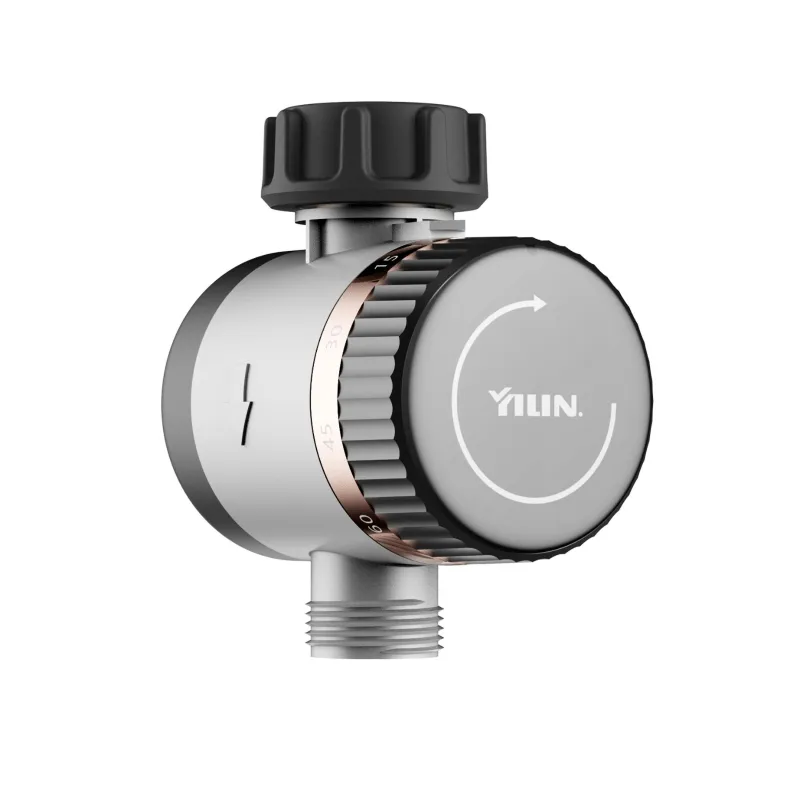
Modern agriculture faces mounting pressure to optimize water usage while maximizing crop yields, and IoT-based farming solutions have emerged as the cornerstone of this transformation. At the heart of precision irrigation systems lies the smart irrigation controller, a technology that integrates sensor networks, wireless communication protocols, and data analytics to automate water delivery with unprecedented accuracy. For agricultural enterprises, research institutions, and large-scale farming operations seeking to implement advanced irrigation infrastructure, selecting a manufacturer with proven expertise in IoT integration, industrial-grade hardware design, and scalable system architecture becomes a mission-critical decision. The right smart irrigation controller manufacturer doesn't simply supply hardware—they deliver comprehensive solutions that bridge agronomic science, embedded systems engineering, and cloud-based farm management platforms.
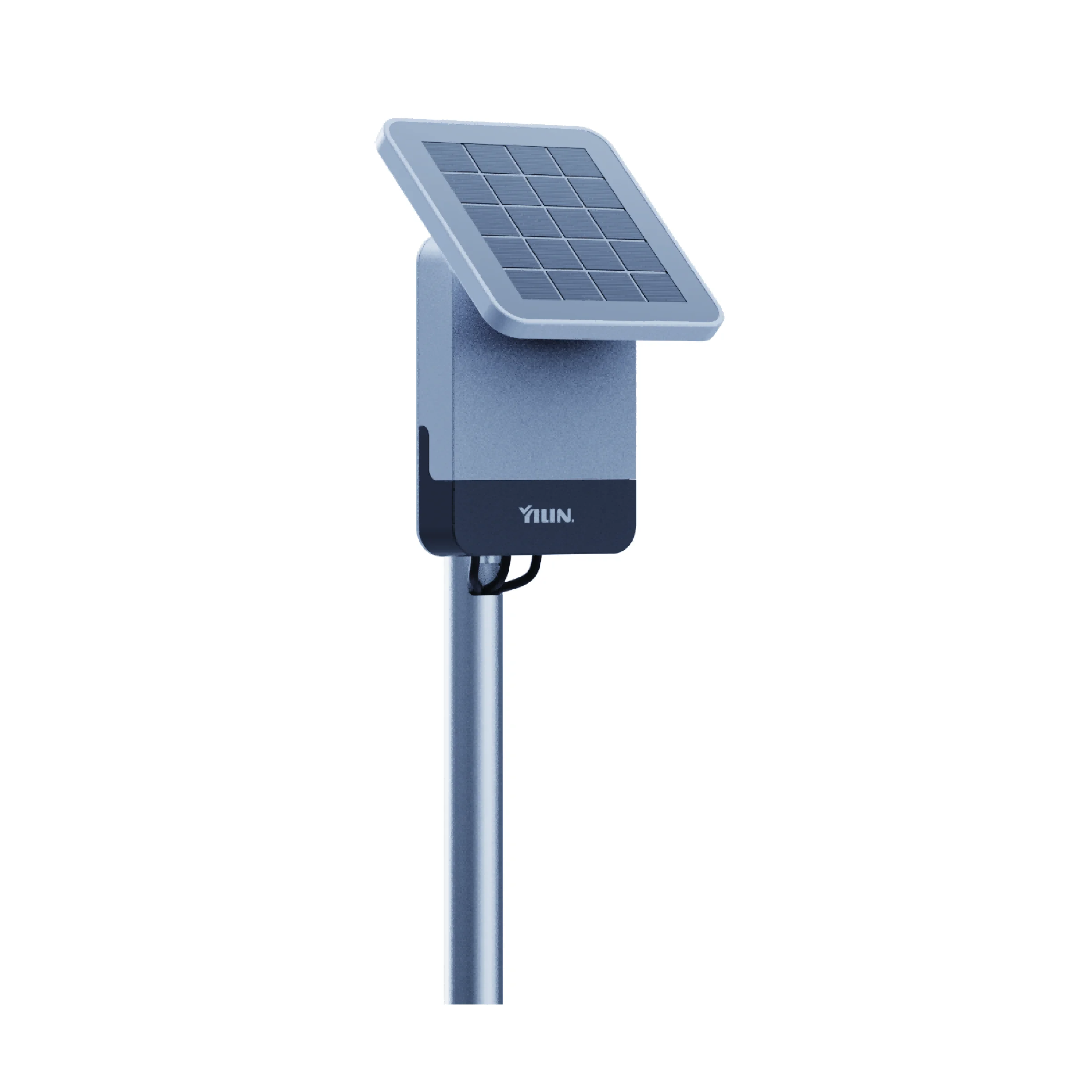
The decision to partner with a specialized smart irrigation controller manufacturer involves evaluating technical capabilities that extend far beyond basic valve automation. Industrial farming applications demand controllers that support multiple communication protocols including 4G LTE and LoRaWAN for remote field connectivity, integrate seamlessly with existing farm management software ecosystems, and withstand harsh environmental conditions ranging from extreme temperatures to high humidity and dust exposure. Furthermore, manufacturers serving the IoT-based farming sector must demonstrate competency in developing firmware that processes real-time soil moisture data, weather forecasts, and evapotranspiration calculations to execute dynamic irrigation schedules. This article examines the critical factors that distinguish leading smart irrigation controller manufacturers, the technical specifications that matter most for commercial agriculture deployments, and the strategic considerations that determine long-term system performance and return on investment.
Core Technical Capabilities of Leading Smart Irrigation Controller Manufacturers
IoT Communication Infrastructure and Protocol Support
A distinguishing characteristic of sophisticated smart irrigation controller manufacturers lies in their implementation of robust IoT communication architectures. Controllers designed for modern agricultural applications must support both cellular connectivity through 4G or 5G networks and low-power wide-area network protocols like LoRaWAN, enabling reliable data transmission across sprawling farm properties where traditional WiFi infrastructure proves impractical. The most advanced smart irrigation controller systems incorporate dual-mode communication that automatically switches between protocols based on signal strength and data priority, ensuring uninterrupted operation even in areas with inconsistent cellular coverage. Manufacturers with deep IoT expertise also implement edge computing capabilities within their controllers, processing sensor data locally to reduce latency in irrigation decisions while still transmitting aggregated analytics to cloud platforms for comprehensive farm monitoring.
The quality of a smart irrigation controller manufacturer's communication infrastructure directly impacts system responsiveness and operational reliability. Controllers equipped with industrial-grade cellular modems featuring extended temperature ranges and enhanced signal sensitivity maintain stable connections in remote agricultural environments where consumer-grade equipment fails. Additionally, manufacturers that support open API architectures and standardized communication protocols such as MQTT and Modbus enable seamless integration with third-party sensors, weather stations, and farm management information systems. This interoperability proves essential for large agricultural operations that require their smart irrigation controller to function as part of a comprehensive precision agriculture ecosystem rather than as an isolated automation device.
Sensor Integration and Data Processing Architecture
The value proposition of any smart irrigation controller hinges on its capacity to ingest, process, and act upon diverse agricultural data streams in real time. Leading manufacturers design controllers with multiple analog and digital input channels that accommodate various sensor types including soil moisture probes, flow meters, pressure transducers, and environmental monitoring devices. The sophistication of the controller's embedded processing unit determines how effectively it can synthesize these disparate data sources into actionable irrigation decisions. High-performance smart irrigation controller systems employ microcontrollers or embedded Linux platforms with sufficient computational resources to run agronomic algorithms that calculate precise irrigation volumes based on crop water requirements, soil infiltration rates, and forecasted precipitation.
Manufacturers that excel in agricultural applications provide controllers with configurable data logging capabilities that capture timestamped sensor readings at user-defined intervals, creating comprehensive irrigation histories that support agronomic analysis and regulatory compliance documentation. The most advanced systems incorporate machine learning frameworks that analyze historical patterns to optimize irrigation schedules automatically, adapting to seasonal variations and long-term climate trends. When evaluating a smart irrigation controller manufacturer, technical buyers should assess the controller's data storage capacity, processing speed for complex calculations, and the sophistication of built-in irrigation algorithms. Controllers that merely respond to threshold triggers represent basic automation, whereas systems that perform predictive modeling and multi-factor optimization deliver genuine precision agriculture capabilities.
Control Output Flexibility and Scalability
Commercial agricultural applications demand smart irrigation controller architectures that scale from small specialty crop operations to industrial farming enterprises managing thousands of irrigated acres. Reputable manufacturers offer modular controller designs with expandable output configurations, typically supporting anywhere from eight to sixty-four independently controlled irrigation zones through relay outputs or latching solenoid drivers. The electrical specifications of these outputs matter considerably—controllers designed for professional irrigation applications provide outputs rated for direct operation of commercial irrigation valves without requiring external relay boards, simplifying installation and reducing potential failure points. Additionally, manufacturers serving large-scale operations offer controllers with distributed architecture capabilities, where multiple field-deployed control units coordinate through a central management platform to execute synchronized irrigation programs across extensive farm properties.
The programming flexibility built into a smart irrigation controller by its manufacturer determines how effectively the system adapts to diverse cropping patterns and irrigation methodologies. Controllers should support complex scheduling options including sequential zone operation to accommodate limited water supply capacities, simultaneous multi-zone activation for uniform field coverage, and program stacking that allows different irrigation protocols for crops at various growth stages. Leading manufacturers also implement proportional control capabilities for variable-rate irrigation applications, where output intensity varies spatially based on soil characteristics or topography rather than applying uniform water volumes across entire fields. This level of control sophistication separates industrial-grade smart irrigation controller systems from residential-market adaptations that lack the configuration depth required for professional agriculture.
Manufacturing Standards and Quality Assurance for Agricultural IoT Hardware
Environmental Durability and Industrial Certification
The operational environment for agricultural smart irrigation controller installations presents extreme challenges that consumer electronics never encounter. Controllers mounted in field enclosures experience temperature fluctuations ranging from freezing winters to summer heat exceeding forty-five degrees Celsius, humidity levels approaching saturation during irrigation cycles, and exposure to agricultural chemicals, dust, and insects. Manufacturers with genuine agricultural expertise design controllers to IP65 or IP67 ingress protection standards, employing conformal coating on circuit boards, sealed connectors, and robust enclosure designs that prevent moisture intrusion and particulate contamination. The selection of electronic components rated for extended temperature ranges and the implementation of thermal management strategies such as ventilation channels or heat-dissipating enclosure materials distinguish professionally engineered smart irrigation controller hardware from adapted consumer products.
Quality-focused manufacturers subject their controllers to rigorous environmental testing protocols that simulate years of field operation under accelerated conditions. This includes thermal cycling tests that rapidly alternate between temperature extremes, humidity chamber testing at high moisture levels, vibration testing that simulates transportation and installation stresses, and electromagnetic compatibility testing to ensure the controller neither emits excessive RF interference nor succumbs to electrical noise from nearby equipment. Manufacturers serving regulated agricultural markets often pursue certifications such as CE marking for European markets, FCC compliance for North American installations, and agricultural equipment standards that demonstrate their smart irrigation controller meets baseline safety and performance requirements. These certifications provide objective validation of manufacturing quality beyond marketing claims.
Supply Chain Management and Component Sourcing
The reliability and longevity of a smart irrigation controller depend fundamentally on the quality of components selected during the design phase and the manufacturer's supply chain integrity. Reputable manufacturers maintain transparent component sourcing practices, utilizing electronic parts from established semiconductor vendors rather than unverified suppliers offering suspiciously inexpensive alternatives. The specification of industrial-grade microcontrollers, automotive-qualified power management integrated circuits, and commercial-temperature-range communication modules ensures consistent performance across the controller's operational lifespan. Manufacturers with mature quality systems implement incoming inspection protocols that verify component authenticity and electrical specifications before assembly, preventing counterfeit or substandard parts from entering production.
The assembly processes employed by smart irrigation controller manufacturers significantly impact product reliability. Automated surface-mount technology placement with optical inspection systems produces more consistent solder joints than manual assembly, reducing field failure rates. Manufacturers that operate or partner with ISO9001-certified assembly facilities demonstrate commitment to process control and continuous improvement methodologies. Additionally, the implementation of functional testing protocols where every manufactured smart irrigation controller undergoes powered operation with simulated sensor inputs and valve control sequences before shipment ensures that defective units never reach customer installations. When selecting a manufacturer, technical buyers should inquire about production testing procedures, failure rate statistics, and warranty claim patterns to assess true manufacturing quality.
Firmware Development Practices and Update Infrastructure
The software embedded within a smart irrigation controller determines its functional capabilities and long-term adaptability to evolving agricultural practices. Leading manufacturers employ professional firmware development teams that follow structured software engineering practices including version control, code review processes, and systematic testing protocols. The architecture of the controller's firmware should separate hardware abstraction layers from application logic, enabling manufacturers to release feature enhancements and algorithm improvements without requiring complete system redesigns. Controllers designed with over-the-air firmware update capabilities allow manufacturers to deploy bug fixes, security patches, and new features remotely, dramatically reducing the lifecycle cost of ownership for large installations where physically accessing every controller proves logistically challenging.
The security architecture implemented by smart irrigation controller manufacturers has grown increasingly critical as agricultural IoT systems become targets for cyber threats. Responsible manufacturers incorporate secure boot mechanisms that prevent unauthorized firmware modification, encrypted communication channels that protect data in transit, and authentication protocols that restrict system access to authorized users. The manufacturer's commitment to ongoing security monitoring and their responsiveness to discovered vulnerabilities indicate whether they view their smart irrigation controller as a long-term platform requiring continuous stewardship or simply as a one-time hardware sale. Agricultural enterprises deploying connected irrigation systems should evaluate manufacturers based on their firmware update history, published security policies, and demonstrated capacity to support deployed systems over multi-year operational periods.
Integration Ecosystem and Platform Compatibility
Agricultural Management Software Connectivity
The value of a smart irrigation controller multiplies when it integrates seamlessly into comprehensive farm management ecosystems rather than functioning as a standalone automation device. Progressive manufacturers design their controllers with API-first architectures that expose irrigation system data and control functions to third-party agricultural management platforms. This enables farm operators to view irrigation status alongside other operational metrics such as equipment location, labor allocation, and crop health indices within unified dashboards. Controllers that support RESTful APIs, WebSocket connections for real-time data streaming, and webhook notifications for event-driven workflows facilitate the development of custom integrations that align irrigation automation with specific operational requirements of individual farming enterprises.
The most sophisticated smart irrigation controller manufacturers develop or partner with cloud platform providers to offer complete irrigation management solutions that extend beyond basic hardware functionality. These platforms typically provide web-based and mobile interfaces for remote system monitoring and adjustment, historical data visualization with customizable reporting, and advanced analytics that identify irrigation inefficiencies or system malfunctions. Controllers designed to work within these ecosystems transmit detailed operational data including flow rates, valve performance metrics, and communication link quality that enable predictive maintenance strategies. When evaluating manufacturers, technical buyers should assess not only the controller hardware specifications but also the maturity and feature richness of the accompanying software platform, as this determines the practical usability and long-term value of the irrigation system.
Sensor Network Compatibility and Expansion Options
Precision irrigation strategies depend on dense networks of field-deployed sensors that provide granular data about soil conditions, microclimate variations, and plant stress indicators. Leading smart irrigation controller manufacturers design their systems to accommodate diverse sensor types through standardized input interfaces and flexible configuration options. Controllers should support both analog sensors that output voltage or current signals proportional to measured parameters and digital sensors that communicate via protocols like SDI-12, RS-485, or I2C. The most versatile systems also integrate with wireless sensor networks that use LoRa, Zigbee, or other low-power protocols to transmit data from battery-operated field instruments, eliminating the need for extensive wiring infrastructure in large agricultural installations.
Manufacturers that understand agricultural workflows provide smart irrigation controller systems with sensor calibration tools, data validation algorithms that flag implausible readings, and configurable sensor-to-action mappings that define how specific measurements influence irrigation decisions. Controllers designed for research applications or high-value specialty crops often include support for advanced instrumentation such as dendrometers that measure plant stem diameter, sap flow sensors that directly quantify plant water uptake, and multispectral imaging systems that assess crop health. The extensibility of a manufacturer's controller platform—its capacity to incorporate new sensor types through firmware updates or hardware expansion modules—determines whether the system remains relevant as agricultural sensing technology advances or becomes obsolete when new measurement capabilities emerge.
Weather Data Integration and Predictive Algorithms
Effective irrigation management requires not only responding to current soil conditions but anticipating future water requirements based on forecasted weather patterns. Advanced smart irrigation controller manufacturers integrate their systems with weather data services that provide hyperlocal precipitation forecasts, evapotranspiration calculations, and severe weather alerts. Controllers that automatically adjust irrigation schedules in response to predicted rainfall prevent wasteful water application and reduce energy costs associated with pumping unnecessary volumes. The sophistication of weather integration ranges from simple precipitation thresholds that pause scheduled irrigation to complex algorithms that dynamically recalculate crop water needs based on forecasted temperature, humidity, wind speed, and solar radiation over multi-day planning horizons.
Manufacturers serving professional agriculture markets often develop proprietary irrigation scheduling algorithms that combine real-time sensor data, weather forecasts, crop-specific growth models, and soil hydraulic properties to generate optimized irrigation prescriptions. These algorithms account for factors such as effective rooting depth that changes throughout the growing season, variable infiltration rates across different soil types within a single field, and irrigation system characteristics including application uniformity and minimum runtime requirements. When evaluating a smart irrigation controller manufacturer, technical buyers should investigate the scientific basis of implemented algorithms, whether the manufacturer employs agronomists or irrigation engineers in product development, and how the system handles the inevitable uncertainties in weather forecasts and soil parameter estimates. Controllers that simply respond to instantaneous measurements without predictive capabilities miss opportunities for proactive water management that characterizes truly intelligent irrigation systems.
Commercial Considerations and Long-Term Partnership Factors
Technical Support Infrastructure and Agronomic Expertise
The complexity of deploying and optimizing smart irrigation controller systems for commercial agriculture demands manufacturer support that extends beyond basic technical troubleshooting. Leading manufacturers maintain application engineering teams with practical agricultural experience who can assist with system design, sensor placement strategies, and irrigation scheduling configuration tailored to specific crops and growing conditions. This agronomic expertise proves particularly valuable during initial deployment when calibrating soil moisture thresholds, configuring crop coefficients, and establishing baseline irrigation programs requires understanding both the technological capabilities of the controller and the physiological water requirements of cultivated plants. Manufacturers that offer installation training, commissioning assistance, and ongoing optimization consultations reduce the time required for agricultural operations to realize return on investment from their irrigation automation infrastructure.
The availability and responsiveness of technical support channels significantly impacts operational continuity for farms dependent on automated irrigation systems. Manufacturers serving commercial agriculture should provide multiple support pathways including phone-based technical assistance during extended hours that accommodate agricultural work schedules, email ticketing systems with documented response time commitments, and remote diagnostic capabilities that allow support personnel to access controller configurations and system logs to expedite troubleshooting. The most customer-focused smart irrigation controller manufacturers maintain online knowledge bases with detailed documentation, configuration examples for common applications, and video tutorials that enable self-service problem resolution. When selecting a manufacturer, agricultural enterprises should evaluate support responsiveness by testing pre-sales technical inquiries, reviewing customer testimonials regarding support experiences, and confirming the availability of local or regional support personnel who understand regional agricultural practices and growing conditions.
System Lifecycle Cost and Total Cost of Ownership
While initial hardware pricing receives considerable attention during procurement decisions, the total cost of ownership for smart irrigation controller systems encompasses factors that extend throughout multi-year operational lifespans. Controllers designed with modular architectures allow component-level repairs rather than complete unit replacement when failures occur, dramatically reducing long-term maintenance costs. Manufacturers that maintain parts availability for discontinued controller models enable extended system lifecycles for large installations where phased replacement proves more economically viable than wholesale system upgrades. Additionally, the power consumption characteristics of controllers influence operational costs, particularly for solar-powered installations where excessive current draw necessitates larger photovoltaic arrays and battery banks. Manufacturers that implement power-efficient designs with intelligent sleep modes and optimized communication protocols reduce both electrical costs and environmental footprint.
The subscription costs associated with cloud platforms and cellular data connectivity represent ongoing expenses that agricultural operations must budget when deploying smart irrigation controller systems. Manufacturers offering flexible pricing models that scale with farm size, providing options for on-premises data storage to minimize cloud fees, or supporting unlicensed spectrum communication protocols like LoRaWAN that avoid cellular carrier charges enable more predictable long-term cost structures. The warranty terms and duration offered by manufacturers provide insight into their confidence in product reliability and willingness to stand behind their designs. Comprehensive warranties covering both hardware failures and firmware defects, with provisions for advance replacement units that minimize system downtime, demonstrate manufacturer commitment to customer success beyond initial hardware sales. When conducting total cost of ownership analysis, technical buyers should model scenarios including component replacement frequencies, support incident costs, software licensing fees, and potential system expansion expenses to accurately compare offerings from different smart irrigation controller manufacturers.
Manufacturing Capacity and Supply Chain Resilience
Agricultural operations planning significant irrigation infrastructure investments require confidence that their selected smart irrigation controller manufacturer possesses sufficient production capacity and supply chain stability to fulfill orders reliably. Manufacturers with established production facilities, diverse component sourcing strategies, and inventory management systems that buffer against supply chain disruptions provide greater assurance of timely delivery for both initial system deployments and future expansion requirements. The global electronics component shortages experienced in recent years highlighted the vulnerability of manufacturers dependent on single-source components or lacking inventory buffers. Companies that proactively communicated with customers about potential delays, offered alternative controller models with comparable specifications, and prioritized existing customer needs over new account acquisition demonstrated operational maturity and customer-centric values.
The financial stability and business longevity of a smart irrigation controller manufacturer directly impacts the viability of long-term system support and product evolution. Agricultural enterprises investing in automation infrastructure expect their systems to remain operational and supported for decades, not merely the typical consumer product lifecycle of several years. Manufacturers with diversified product portfolios serving multiple agricultural automation segments demonstrate lower business risk than companies dependent on single product lines vulnerable to market fluctuations. Additionally, manufacturers that actively invest in research and development, regularly introducing enhanced controller models with improved capabilities, signal their commitment to remaining competitive in evolving precision agriculture markets. When selecting a manufacturing partner for critical irrigation infrastructure, technical buyers should evaluate company stability indicators including years in operation, customer base diversity, financial backing, and demonstrated product development momentum that suggests ongoing viability as a long-term technology partner.
FAQ
What communication range can agricultural smart irrigation controllers achieve with LoRaWAN connectivity?
Smart irrigation controllers equipped with LoRaWAN communication typically achieve line-of-sight ranges between two and fifteen kilometers depending on terrain, antenna placement, and gateway configuration. In practical agricultural applications with crops, trees, and terrain variations, effective ranges of three to five kilometers represent realistic expectations for reliable connectivity. Manufacturers optimize range performance through high-quality RF design, external antenna options, and adaptive data rate algorithms that balance communication distance against power consumption. For farms exceeding single-gateway coverage, manufacturers offer multi-gateway architectures where controllers automatically connect to the strongest available signal, ensuring comprehensive property coverage.
How do smart irrigation controller manufacturers address cybersecurity concerns for connected farming systems?
Leading manufacturers implement multiple security layers including encrypted communication protocols such as TLS for data transmission, secure authentication mechanisms requiring strong passwords or certificate-based access, and regular firmware updates that patch discovered vulnerabilities. Controllers designed for commercial agriculture incorporate secure boot processes that prevent unauthorized firmware modification and network segmentation capabilities that isolate irrigation systems from other farm networks. Manufacturers committed to security participate in responsible disclosure programs, maintain security advisory processes to notify customers of potential threats, and design systems following industrial IoT security frameworks. Agricultural enterprises should verify that manufacturers follow security best practices and demonstrate ongoing commitment to protecting deployed systems against evolving cyber threats.
What distinguishes industrial-grade smart irrigation controllers from adapted residential systems?
Industrial smart irrigation controllers feature robust hardware specifications including extended temperature ratings typically from negative forty to seventy degrees Celsius, higher ingress protection ratings against moisture and dust, and relay outputs rated for direct commercial valve operation without external contactors. They support greater numbers of independently controlled zones, accommodate professional-grade sensors through multiple input types, and implement sophisticated irrigation algorithms that account for crop-specific water requirements and soil hydraulic properties. Industrial controllers offer extensive data logging, API access for enterprise software integration, and field-serviceable designs with replaceable components. Manufacturers targeting commercial agriculture provide technical support from agronomists and irrigation engineers rather than consumer help desk services, and maintain long-term parts availability and firmware support that matches agricultural equipment lifecycles.
Can smart irrigation controller manufacturers customize systems for specific crop requirements or regional conditions?
Established manufacturers serving commercial agriculture typically offer customization services ranging from firmware modifications that implement crop-specific irrigation algorithms to hardware adaptations that accommodate unique sensor configurations or control requirements. Customization options include pre-configured controller settings optimized for particular crops, regional weather pattern integration, custom communication protocols for proprietary sensor networks, and private-label solutions for agricultural cooperatives or equipment distributors. Manufacturers with flexible production capabilities and experienced engineering teams can develop application-specific controller variants that address specialized requirements such as fertigation synchronization, frost protection activation, or compliance with specific regulatory monitoring mandates. Agricultural enterprises with unique operational requirements should engage manufacturers early in procurement processes to assess customization feasibility, associated costs, and development timelines.
Table of Contents
- Core Technical Capabilities of Leading Smart Irrigation Controller Manufacturers
- Manufacturing Standards and Quality Assurance for Agricultural IoT Hardware
- Integration Ecosystem and Platform Compatibility
- Commercial Considerations and Long-Term Partnership Factors
-
FAQ
- What communication range can agricultural smart irrigation controllers achieve with LoRaWAN connectivity?
- How do smart irrigation controller manufacturers address cybersecurity concerns for connected farming systems?
- What distinguishes industrial-grade smart irrigation controllers from adapted residential systems?
- Can smart irrigation controller manufacturers customize systems for specific crop requirements or regional conditions?
