
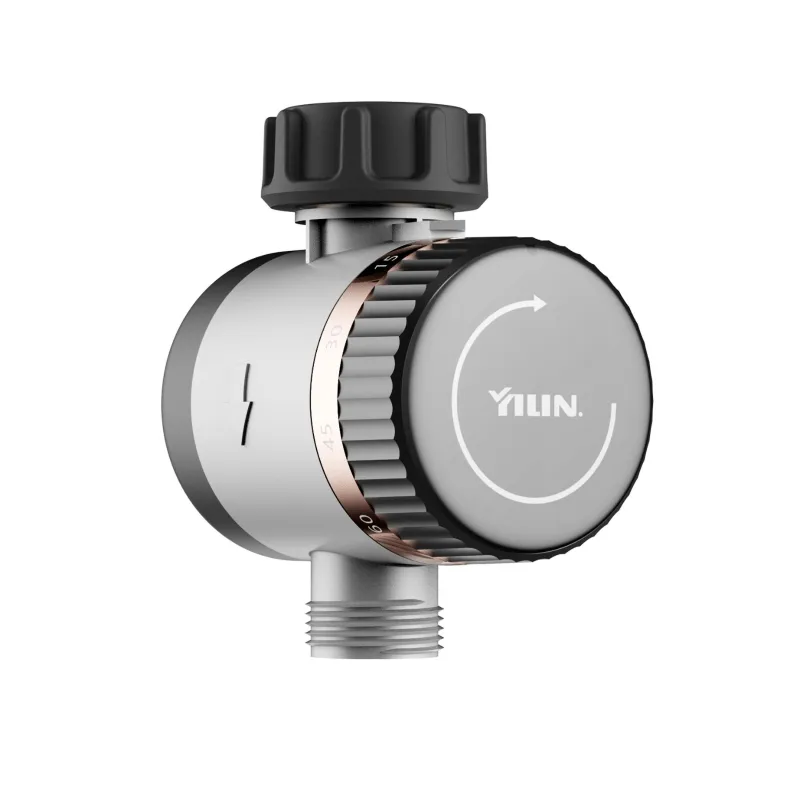
Industrial irrigation systems demand precision engineering and manufacturing excellence to deliver consistent performance across large-scale applications. An industrial sprinkler factory serves as the backbone of modern agricultural and commercial water distribution infrastructure, where advanced manufacturing processes converge with hydraulic engineering principles to produce sprinklers capable of achieving maximum coverage efficiency. These specialized facilities integrate metallurgical expertise, precision machining, and rigorous quality control protocols to ensure every sprinkler unit meets the demanding requirements of industrial-scale irrigation projects.
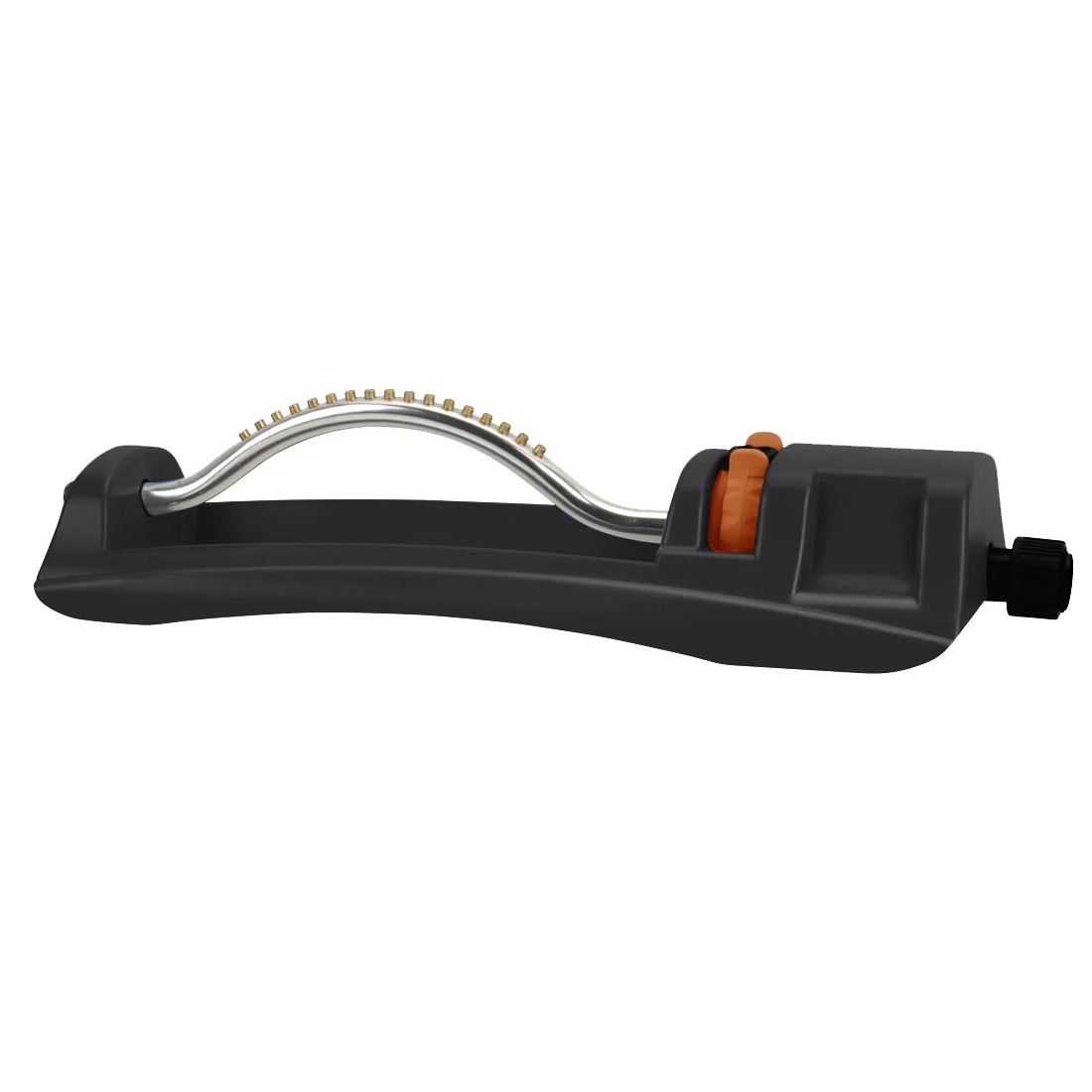
The engineering philosophy behind an industrial sprinkler factory centers on maximizing water distribution uniformity while minimizing resource waste. Modern facilities employ sophisticated design methodologies that account for hydraulic flow dynamics, nozzle geometry optimization, and material selection strategies that directly influence coverage patterns and operational longevity. Understanding how these factories engineer their products for maximum coverage provides valuable insight into selecting irrigation solutions that deliver measurable return on investment through improved crop yields, reduced water consumption, and extended equipment service life.
Manufacturing Engineering Principles in Industrial Sprinkler Production
Precision Machining for Hydraulic Performance
The foundation of maximum coverage begins with precision manufacturing processes within the industrial sprinkler factory environment. Computer numerical control machining centers produce nozzle orifices with tolerances measured in microns, ensuring consistent spray patterns across production runs. This level of precision directly translates to predictable water distribution characteristics that irrigation system designers rely upon when calculating coverage overlaps and spacing requirements for optimal field uniformity.
Advanced factories utilize multi-axis CNC equipment to create complex internal flow passages that condition water flow before it exits the nozzle. These engineered pathways reduce turbulence and create laminar flow conditions that extend throw distance and improve droplet size distribution. The manufacturing precision achieved in an industrial sprinkler factory enables engineers to design products with specific precipitation rates and coverage diameters that match diverse agricultural and landscape applications.
Material removal processes employed in these facilities include high-speed milling, electrical discharge machining, and laser cutting technologies that maintain dimensional accuracy across thousands of production cycles. Quality control stations equipped with optical measurement systems verify that each component meets engineering specifications before assembly, ensuring that the finished sprinkler delivers the coverage performance promised in technical documentation.
Materials Engineering for Durability and Performance
Material selection within an industrial sprinkler factory represents a critical engineering decision that affects both coverage performance and operational lifespan. Brass alloys remain prevalent for nozzle construction due to their excellent corrosion resistance and machinability characteristics. These copper-zinc alloys maintain dimensional stability under continuous water exposure and temperature fluctuations, preventing the orifice deformation that would degrade spray patterns over time.
Engineering-grade polymers have gained prominence in modern industrial sprinkler factory operations for body components and bearings. These materials offer superior chemical resistance against fertilizer solutions and acidic water conditions while reducing manufacturing costs compared to all-metal construction. Advanced polymer formulations incorporate UV stabilizers and impact modifiers that extend service life in harsh outdoor environments without compromising the structural integrity necessary for maintaining precise nozzle alignment.
The industrial sprinkler factory environment includes materials testing laboratories where engineers evaluate corrosion resistance, mechanical strength, and thermal expansion characteristics. These facilities conduct accelerated aging tests that simulate years of field exposure within compressed timeframes, validating material choices before full-scale production begins. This engineering rigor ensures that sprinklers maintain their coverage specifications throughout their intended service life.
Hydraulic Engineering for Coverage Optimization
Nozzle Geometry and Flow Dynamics
The heart of maximum coverage engineering lies in nozzle design, where an industrial sprinkler factory applies computational fluid dynamics modeling to optimize geometry. Engineers analyze flow velocity profiles, pressure drop characteristics, and jet breakup patterns to develop nozzle configurations that produce uniform water distribution across the entire coverage radius. This analytical approach replaces historical trial-and-error methods with predictive design processes that accelerate product development while improving performance outcomes.
Multiple nozzle apertures arranged in strategic patterns characterize modern industrial sprinkler designs emerging from advanced manufacturing facilities. These multi-jet configurations create overlapping spray patterns that compensate for wind effects and fill coverage gaps that single-nozzle designs cannot address. The industrial sprinkler factory environment includes hydraulic test benches where engineers validate these complex spray interactions under controlled conditions before releasing designs to production.
Nozzle inclination angles represent another critical parameter that industrial sprinkler factory engineers manipulate to maximize effective coverage area. Trajectory optimization balances throw distance against droplet impact energy, ensuring adequate soil penetration without causing erosion or compaction. Advanced facilities employ high-speed imaging systems to capture spray trajectories and droplet size distributions, providing empirical data that refines theoretical models and improves next-generation designs.
Pressure Regulation and Flow Control Systems
Consistent coverage performance across varying supply pressures requires sophisticated pressure regulation mechanisms that industrial sprinkler factory teams integrate into their designs. Self-compensating pressure regulators maintain constant nozzle discharge rates despite fluctuations in mainline pressure, ensuring uniform application rates across irrigation zones with elevation changes or long lateral runs. These mechanical devices employ spring-loaded diaphragms or elastomeric elements that respond dynamically to pressure variations.
Flow control engineering within the industrial sprinkler factory extends beyond simple pressure regulation to include precision metering orifices that establish exact discharge rates for specific coverage patterns. Engineers calculate orifice dimensions using hydraulic equations that account for fluid viscosity, pressure coefficients, and contraction losses. Manufacturing tolerances on these critical dimensions must remain extremely tight to ensure that installed systems deliver the application uniformity that irrigation designers specify.
The industrial sprinkler factory environment includes pressure testing chambers where assembled units undergo hydraulic performance verification under simulated field conditions. These tests measure actual discharge rates, verify pressure-flow relationships, and confirm that coverage patterns match design specifications across the intended operating pressure range. Only units that pass these rigorous performance tests receive approval for shipment to customers.
Quality Control Systems for Coverage Consistency
Statistical Process Control in Manufacturing
An industrial sprinkler factory implements statistical process control methodologies to maintain the dimensional consistency necessary for predictable coverage performance. Production operators collect measurement data at defined intervals throughout manufacturing runs, plotting results on control charts that reveal process trends before they produce out-of-specification components. This proactive approach minimizes defect rates and ensures that every sprinkler leaving the facility meets engineering tolerances.
Critical dimensions affecting coverage performance receive enhanced monitoring protocols within the industrial sprinkler factory quality system. Nozzle orifice diameters, internal passage dimensions, and component alignment features undergo 100% inspection using automated measurement systems that provide immediate feedback to production equipment. This closed-loop control eliminates human error and maintains process capability indices that exceed industry standards for precision manufacturing.
The industrial sprinkler factory quality control infrastructure includes environmental testing chambers where randomly selected units undergo temperature cycling, vibration exposure, and accelerated wear protocols. These destructive tests validate that manufacturing processes produce sprinklers capable of withstanding field conditions without performance degradation. Test results feed back into process improvement initiatives that continuously enhance product reliability.
Performance Validation and Certification Testing
Beyond dimensional verification, an industrial sprinkler factory conducts comprehensive performance testing that directly measures coverage uniformity under standardized conditions. Catch-can arrays positioned throughout the spray pattern capture precipitation at multiple radial distances, generating distribution uniformity coefficients that quantify coverage quality. These empirical measurements verify that manufactured units achieve the performance specifications engineers promised during the design phase.
Certification testing protocols within the industrial sprinkler factory often align with international standards established by organizations such as the American Society of Agricultural and Biological Engineers. These standardized test methods ensure that performance claims remain comparable across manufacturers and provide irrigation designers with reliable data for system planning. Factory test reports document flow rates, pressure requirements, coverage diameters, and application uniformity metrics that support professional irrigation design calculations.
The industrial sprinkler factory maintains calibrated reference standards traceable to national metrology institutes, ensuring measurement accuracy throughout the quality control process. Regular equipment calibration schedules and proficiency testing programs validate that factory measurements remain consistent over time and comparable to independent testing laboratories. This metrological discipline provides customers with confidence that published performance specifications reflect actual product capabilities.
Advanced Manufacturing Technologies Enhancing Coverage Performance
Additive Manufacturing for Prototype Development
Progressive industrial sprinkler factory operations have adopted additive manufacturing technologies to accelerate design iteration cycles during product development. Three-dimensional printing enables engineers to produce functional prototypes with complex internal geometries that would be impossible or prohibitively expensive using traditional machining methods. These rapid prototypes undergo hydraulic testing that validates computational fluid dynamics predictions before committing to expensive tooling investments for mass production.
The design freedom afforded by additive manufacturing allows industrial sprinkler factory engineers to explore unconventional nozzle configurations and flow distribution chambers that optimize coverage patterns for specific applications. Lattice structures that promote flow mixing, variable-geometry orifices that adapt to pressure changes, and integrated filtration elements that protect precision nozzles represent innovations enabled by additive manufacturing capabilities within forward-thinking facilities.
While additive manufacturing currently serves primarily as a prototyping tool in most industrial sprinkler factory environments, emerging materials and process improvements suggest future potential for direct production of specialized components. Metal laser sintering technologies produce brass and stainless steel parts with mechanical properties approaching conventionally manufactured components, potentially enabling economical small-batch production of custom sprinkler configurations tailored to unique application requirements.
Automation and Robotic Assembly Systems
Modern industrial sprinkler factory facilities increasingly rely on robotic automation to achieve the assembly precision necessary for consistent coverage performance. Automated systems position components with repeatability measured in hundredths of millimeters, ensuring that nozzle alignments and seal interfaces meet exacting specifications across every unit produced. This mechanical consistency eliminates human variability that could introduce performance differences between supposedly identical sprinklers.
Vision-guided robotic systems within the industrial sprinkler factory environment perform quality inspections at multiple assembly stages, detecting dimensional deviations and cosmetic defects before they progress to subsequent operations. These automated inspection stations operate at speeds exceeding human capabilities while maintaining perfect consistency in applying acceptance criteria. Real-time data from vision systems feeds into manufacturing execution systems that track quality metrics and trigger corrective actions when processes drift toward specification limits.
The integration of collaborative robots in industrial sprinkler factory assembly cells combines the precision of automation with the flexibility of human workers. These systems handle repetitive tasks requiring exact positioning while operators perform judgment-intensive operations that benefit from human dexterity and problem-solving capabilities. This hybrid approach optimizes manufacturing efficiency while maintaining the quality control necessary for coverage performance consistency.
Engineering Applications and Coverage Optimization Strategies
Agricultural Irrigation System Design
Products emerging from an industrial sprinkler factory find primary application in agricultural irrigation systems where coverage uniformity directly affects crop yield and water use efficiency. System designers specify sprinkler spacing patterns based on manufacturer-provided coverage data, creating overlapping spray patterns that compensate for wind effects and ensure every square meter of field area receives adequate water application. The engineering precision achieved during manufacturing enables these design calculations to translate reliably into field performance.
Center pivot and lateral move irrigation machines rely on industrial sprinkler factory products engineered for specific pressure ranges and flow rates that match system hydraulics. Engineers select nozzle sizes and configurations that maintain application uniformity across the entire machine length despite varying pressures from inlet to end tower. The manufacturing consistency achieved in modern facilities ensures that installed nozzles deliver their specified flow rates, preventing over-irrigation near the pivot point and under-irrigation at the machine extremity.
Solid-set irrigation systems for high-value crops demand the highest coverage uniformity standards that industrial sprinkler factory engineering can deliver. These permanent installations position sprinklers at precisely calculated spacings based on manufacturer wind drift data and precipitation rate specifications. Field uniformity coefficients exceeding 85% become achievable when system designers properly apply the performance characteristics that quality-focused manufacturing facilities document through rigorous testing protocols.
Commercial and Industrial Landscape Applications
Beyond agricultural markets, industrial sprinkler factory products serve commercial landscape irrigation where aesthetic considerations and water conservation regulations demand precise coverage control. Golf courses, sports fields, and municipal parks require sprinklers that deliver uniform turf coverage without over-spraying onto hardscapes or creating dry spots that compromise appearance. The engineering precision available from specialized manufacturing facilities enables landscape architects to design systems meeting these exacting requirements.
Industrial applications including dust suppression, cooling systems, and material processing utilize specialized sprinklers emerging from facilities capable of engineering products for non-irrigation purposes. These applications often require custom coverage patterns, droplet size distributions, or chemical compatibility characteristics that standard agricultural products cannot provide. The manufacturing flexibility and engineering expertise concentrated in advanced industrial sprinkler factory operations enables development of these specialized solutions.
Water conservation mandates increasingly drive demand for high-efficiency sprinklers that industrial sprinkler factory teams engineer specifically for low precipitation rate applications. These products distribute water in fine droplets that minimize runoff on sloped terrain and maximize infiltration on heavy soils. Manufacturing facilities that maintain tight process controls deliver the nozzle precision necessary for these efficiency-optimized designs to perform as engineers intended throughout their service life.
FAQ
What manufacturing tolerances are critical for industrial sprinkler coverage performance?
Critical manufacturing tolerances in an industrial sprinkler factory focus primarily on nozzle orifice dimensions, which typically require accuracy within plus or minus 0.05 millimeters to maintain specified flow rates and spray patterns. Internal flow passage dimensions affecting pressure drop and flow conditioning also demand tight tolerances, generally held to within 0.1 millimeters. Component alignment features such as bearing surfaces and threaded connections require precision to prevent wobble or misalignment that would distort coverage patterns. Advanced facilities achieve these tolerances through CNC machining, automated inspection systems, and statistical process control methodologies that maintain capability indices above 1.33 for critical dimensions.
How do industrial sprinkler factories test coverage uniformity before products ship?
Industrial sprinkler factory quality control protocols include hydraulic test stands where assembled units operate under controlled pressure conditions while catch containers positioned at regular intervals throughout the spray pattern collect water over timed periods. Technicians measure collected volumes and calculate distribution uniformity coefficients using standardized formulas that quantify coverage consistency. Many facilities employ automated catch-can arrays with electronic weighing systems that accelerate data collection and improve measurement accuracy. Test results are compared against design specifications, and only units meeting minimum uniformity thresholds receive approval for shipment. Representative samples from each production lot undergo this testing to verify manufacturing consistency.
What materials provide the best combination of coverage precision and durability?
Industrial sprinkler factory engineers typically specify brass alloys for precision nozzle components due to their excellent machinability, corrosion resistance, and dimensional stability under thermal cycling. Brass maintains sharp orifice edges that promote clean jet formation and resists erosion from suspended particles in irrigation water. Engineering polymers such as acetal copolymers and glass-filled nylon serve well for body components and internal mechanisms where chemical resistance and impact strength outweigh the need for extreme precision. Stainless steel finds application in highly corrosive environments or where mechanical strength exceeds brass capabilities. Material selection balances performance requirements against manufacturing costs and expected service life in specific application environments.
How does manufacturing precision affect long-term irrigation system performance?
Manufacturing precision achieved in an industrial sprinkler factory directly determines whether irrigation systems maintain design performance throughout their operational life. Precisely manufactured nozzles resist dimensional changes from wear and corrosion, preserving spray patterns and flow rates that system designers specified for uniform coverage. Accurate component tolerances prevent excessive bearing wear that would introduce wobble and pattern distortion as sprinklers age. Properly manufactured seals and pressure regulation mechanisms maintain consistent performance across the system operating pressure range, preventing the flow variations that create wet and dry zones in irrigated areas. Systems installed with precision-manufactured sprinklers typically require less maintenance and deliver more predictable return on investment through consistent crop yields and water use efficiency over multi-decade service lives.
Table of Contents
- Manufacturing Engineering Principles in Industrial Sprinkler Production
- Hydraulic Engineering for Coverage Optimization
- Quality Control Systems for Coverage Consistency
- Advanced Manufacturing Technologies Enhancing Coverage Performance
- Engineering Applications and Coverage Optimization Strategies
-
FAQ
- What manufacturing tolerances are critical for industrial sprinkler coverage performance?
- How do industrial sprinkler factories test coverage uniformity before products ship?
- What materials provide the best combination of coverage precision and durability?
- How does manufacturing precision affect long-term irrigation system performance?
