
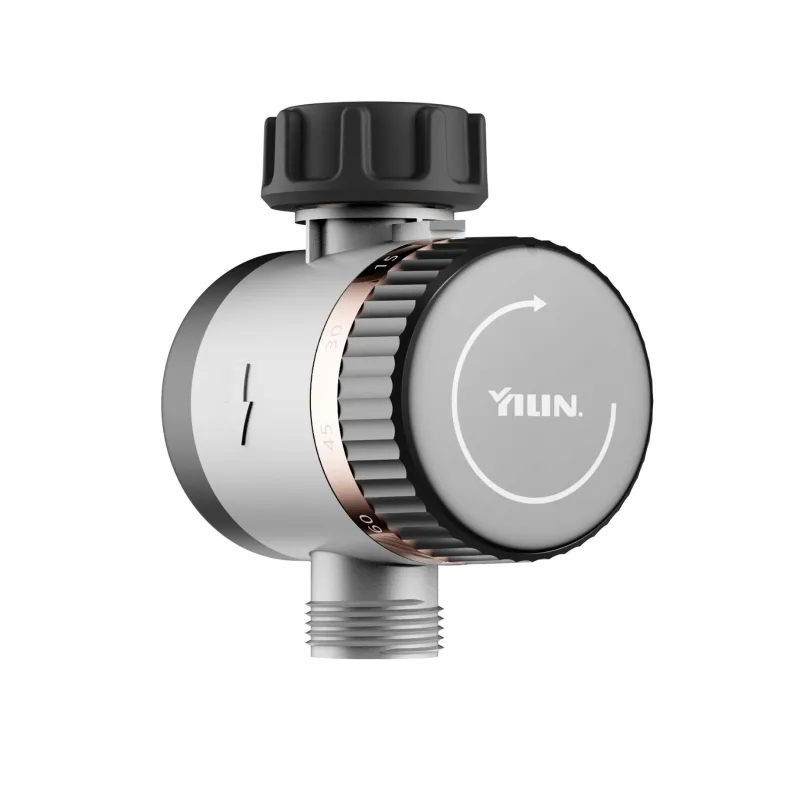
Commercial turf care operations demand irrigation equipment that delivers consistent performance, durability, and operational efficiency under intensive use conditions. Whether managing sports complexes, golf courses, municipal parks, or large-scale landscaping projects, facility managers and grounds maintenance professionals require irrigation solutions engineered specifically for commercial-grade applications. A high-performance sprinkler designed for commercial turf care environments must withstand frequent operation cycles, deliver uniform water distribution across expansive areas, and maintain reliability season after season. The selection of an appropriate manufacturer capable of producing such equipment becomes a critical decision that directly impacts turf quality, water resource management, and long-term operational costs.
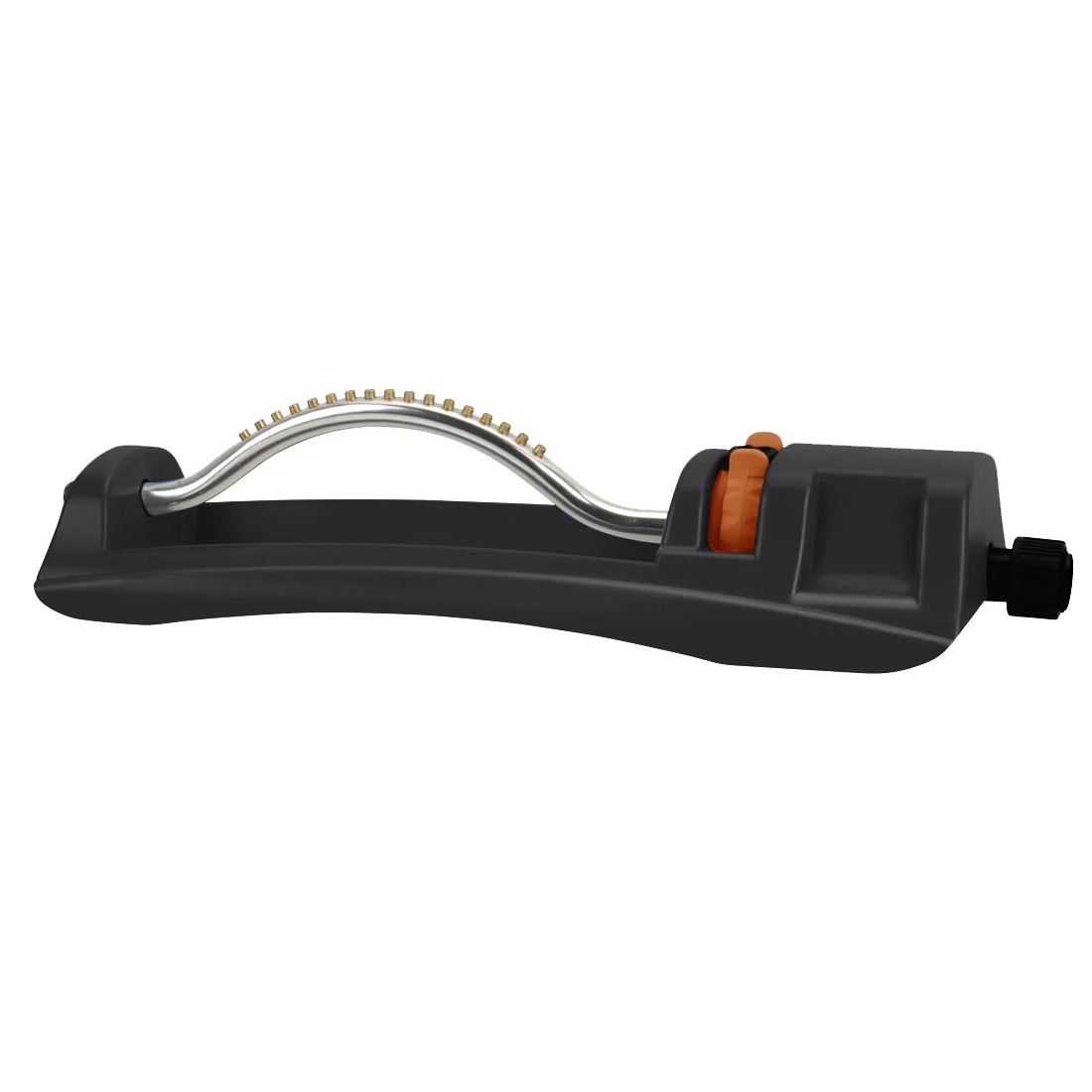
Identifying a manufacturer that specializes in high-performance sprinkler systems for commercial turf applications requires understanding the specific engineering characteristics, material quality standards, and design features that differentiate professional-grade equipment from consumer alternatives. Commercial turf care professionals face unique challenges including extended coverage requirements, variable water pressure conditions, and the need for equipment that maintains precision performance despite continuous exposure to outdoor elements. This article examines the essential attributes that define a reputable high-performance sprinkler manufacturer, explores the technical specifications that matter most in commercial turf care settings, and provides practical guidance for evaluating manufacturers based on product design, material integrity, and operational functionality.
Engineering Standards That Define Commercial-Grade Sprinkler Manufacturing
Material Selection and Durability Engineering
A manufacturer committed to producing high-performance sprinkler equipment for commercial turf care applications prioritizes material selection as the foundation of product longevity. Commercial environments subject irrigation equipment to UV exposure, temperature fluctuations, chemical exposure from fertilizers and soil amendments, and mechanical stress from repeated operation cycles. Manufacturers that understand these operational realities incorporate corrosion-resistant metals such as brass for critical components including nozzles, connectors, and adjustment mechanisms. Brass construction offers superior resistance to mineral deposits from hard water, maintains dimensional stability under pressure variations, and provides the wear resistance necessary for extended service life in commercial settings.
Beyond brass components, the housing and structural elements of a high-performance sprinkler require engineering-grade polymers that resist UV degradation, impact damage, and chemical interaction. Professional manufacturers utilize impact-modified ABS or reinforced composite materials that maintain structural integrity despite exposure to lawn care equipment traffic, accidental impacts, and extreme weather conditions. The integration of brass components with advanced polymer housings represents a balanced engineering approach that combines the functional benefits of metal precision parts with the weight reduction and cost efficiency of modern polymer technology. This material strategy directly influences the total cost of ownership for commercial turf care operations by extending replacement intervals and reducing maintenance requirements.
Precision Manufacturing Processes and Quality Control
The manufacturing processes employed in producing a high-performance sprinkler significantly impact the consistency of water distribution patterns, operational reliability, and service life. Reputable manufacturers implement precision machining for brass nozzle components, ensuring that orifice dimensions remain within tight tolerances that directly affect spray patterns and water distribution uniformity. CNC machining capabilities allow manufacturers to maintain dimensional accuracy across production runs, which becomes essential when commercial operations require consistent performance across multiple units deployed throughout an extensive turf care area. The spray pattern consistency achieved through precision manufacturing directly correlates with turf quality outcomes and water use efficiency.
Quality control protocols distinguish manufacturers capable of consistent commercial-grade production from those focused on consumer markets. Professional manufacturers implement multi-stage inspection processes including component dimensional verification, assembly quality checks, and functional performance testing under simulated operating conditions. Pressure testing protocols verify that each high-performance sprinkler maintains seal integrity and operates correctly across the specified pressure range, while spray pattern verification confirms distribution uniformity before units leave the production facility. These quality assurance investments translate to reduced field failures, predictable performance characteristics, and lower warranty claim rates for commercial turf care operations.
Design Features Optimized for Commercial Applications
Manufacturers specializing in commercial turf care equipment incorporate design features specifically addressing the operational requirements of professional grounds maintenance. Adjustability mechanisms must allow precise control over coverage patterns while maintaining settings despite vibration and environmental exposure. A high-performance sprinkler designed for commercial use typically includes tool-free adjustment capabilities that enable maintenance staff to modify spray patterns, adjust coverage angles, and control flow rates without specialized equipment. This operational flexibility becomes essential in diverse turf care environments where irrigation requirements vary by zone, season, and specific turf species requirements.
Connection systems represent another critical design consideration for commercial applications. Professional-grade manufacturers engineer connection interfaces that accommodate standard commercial irrigation fittings, provide leak-resistant sealing, and withstand the connection and disconnection cycles typical in grounds maintenance operations. Quick-connect systems with positive locking mechanisms enable efficient setup and repositioning of irrigation equipment across large commercial properties. The base stability design must prevent tipping during operation while allowing easy relocation, often incorporating weighted bases or stake mounting options that suit various ground conditions from compacted athletic fields to newly established turf areas.
Technical Performance Characteristics for Commercial Turf Care
Coverage Area and Water Distribution Uniformity
The coverage capacity of a high-performance sprinkler determines its suitability for commercial turf care applications where efficiency and labor productivity directly impact operational costs. Commercial operations require irrigation equipment capable of covering substantial areas with minimal repositioning, reducing labor time while maintaining uniform water distribution. Manufacturers engineering for commercial markets design spray patterns that extend coverage radius while maintaining distribution uniformity coefficients suitable for professional turf management. The relationship between nozzle configuration, operating pressure, and coverage area becomes a critical specification that grounds maintenance professionals evaluate when selecting equipment.
Water distribution uniformity directly affects turf quality outcomes and water resource efficiency in commercial settings. A high-performance sprinkler must deliver consistent precipitation rates across the coverage area, avoiding the dry spots and overwatered zones that compromise turf health and appearance. Manufacturers achieve distribution uniformity through careful nozzle placement geometry, spray angle optimization, and oscillation or rotation mechanisms that overlap coverage patterns appropriately. Commercial turf care operations often measure distribution uniformity using coefficients such as the Distribution Uniformity (DU) metric, with professional-grade equipment targeting DU values above eighty-five percent to ensure consistent turf conditions across extensive areas.
Operating Pressure Range and Flow Rate Performance
Commercial irrigation systems operate under varying pressure conditions depending on water source characteristics, elevation changes across the property, and the number of zones operating simultaneously. A high-performance sprinkler manufacturer designs equipment with operational flexibility across a practical pressure range, ensuring consistent performance whether connected to municipal water systems, well pump installations, or gravity-feed irrigation networks. The specified pressure range should align with typical commercial irrigation system characteristics, generally performing optimally between thirty and sixty PSI while maintaining acceptable function at pressure extremes that occur during system startup or zone transitions.
Flow rate characteristics determine water application efficiency and compatibility with existing irrigation infrastructure capacity. Manufacturers specify flow rates at defined pressure levels, allowing turf care professionals to calculate total water consumption, zone capacity, and irrigation scheduling requirements. A high-performance sprinkler designed for commercial use balances flow rate with coverage area to optimize application efficiency, typically delivering precipitation rates between zero point two and zero point five inches per hour depending on coverage settings. This precipitation rate range allows adequate soil infiltration while providing sufficient moisture delivery for established turf maintenance in most commercial environments.
Durability Under Continuous Operation Conditions
Commercial turf care operations frequently run irrigation systems for extended periods, particularly during establishment phases, heat stress conditions, or drought response scenarios. The durability of a high-performance sprinkler under continuous operation depends on bearing design, seal technology, and thermal management of moving components. Professional manufacturers incorporate sealed bearings in oscillation or rotation mechanisms, preventing grit infiltration that causes premature wear. Seal designs must maintain integrity despite continuous water exposure, preventing leakage while allowing smooth mechanical operation throughout the equipment service life.
The thermal characteristics of brass components and polymer housings affect performance stability during extended operation cycles. Quality manufacturers select materials and design cooling pathways that prevent heat buildup in mechanical assemblies, maintaining dimensional stability and lubrication effectiveness during multi-hour irrigation sessions. Commercial operations require equipment that delivers consistent spray patterns from startup through shutdown regardless of runtime duration, a performance characteristic that distinguishes professionally engineered equipment from consumer-grade alternatives. Durability testing protocols employed by reputable manufacturers simulate thousands of operation hours to verify that performance degradation remains within acceptable limits throughout the expected service life.
Manufacturer Evaluation Criteria for Commercial Procurement
Production Capacity and Supply Chain Reliability
Commercial turf care operations managing multiple facilities or large-scale properties require manufacturers with sufficient production capacity to fulfill substantial orders within reasonable timeframes. A high-performance sprinkler manufacturer serving commercial markets should demonstrate established production capabilities, inventory management systems, and logistics partnerships that ensure product availability during peak seasonal demand periods. The ability to supply consistent quantities of standardized products becomes essential when commercial operations require equipment replacement or expansion of irrigation infrastructure across multiple sites.
Supply chain reliability extends beyond initial order fulfillment to encompass replacement parts availability, technical support accessibility, and long-term product line stability. Commercial operations make procurement decisions based on total cost of ownership calculations that include future parts availability and equipment standardization benefits. Manufacturers that maintain consistent product designs, stock replacement components, and provide technical documentation enable commercial turf care operations to standardize equipment across facilities, simplify maintenance training, and optimize spare parts inventory. This operational continuity delivers value throughout the equipment lifecycle, reducing the hidden costs associated with product discontinuation or design changes that render existing equipment obsolete.
Technical Documentation and Professional Support Resources
Professional turf care operations require comprehensive technical documentation that enables informed procurement decisions, proper installation procedures, and effective maintenance protocols. A high-performance sprinkler manufacturer committed to commercial markets provides detailed specification sheets including coverage patterns at various pressures, flow rate charts, dimensional drawings, and material composition disclosures. This technical transparency allows grounds maintenance professionals to evaluate equipment compatibility with existing systems, calculate water budget requirements, and verify compliance with property-specific irrigation regulations or water use restrictions.
Beyond product documentation, manufacturers serving commercial markets often provide application support resources including installation guidance, troubleshooting protocols, and maintenance best practices tailored to professional use environments. Access to technical support personnel who understand commercial irrigation system requirements enables efficient problem resolution and optimization of equipment performance within specific property conditions. Some manufacturers offer training resources for maintenance staff, ensuring proper equipment handling and adjustment procedures that maximize service life and performance consistency. These professional support capabilities distinguish manufacturers focused on commercial markets from those primarily serving retail consumer channels.
Warranty Coverage and Commercial Service Policies
Warranty terms reflect manufacturer confidence in product durability and provide commercial operations with risk mitigation against premature equipment failure. A high-performance sprinkler manufacturer targeting commercial turf care markets typically offers warranty coverage exceeding consumer product standards, often providing multi-year protection against material defects and manufacturing flaws. Commercial warranty policies should clearly define coverage terms, claim procedures, and replacement or repair protocols that minimize operational disruption when equipment issues occur. The practical value of warranty coverage depends on claim process efficiency and manufacturer responsiveness, factors that become apparent through industry reputation and peer recommendations.
Service policies tailored to commercial customers may include volume purchase incentives, expedited shipping for urgent replacement needs, or field service support for large-scale installations. Manufacturers that understand commercial operational requirements structure policies that acknowledge the higher stakes of equipment failure in professional turf care environments where irrigation system downtime directly impacts turf quality and property appearance. Evaluation of manufacturer service capabilities should include assessment of return procedures, technical support availability during critical growing seasons, and the manufacturer's track record for standing behind product performance claims when field conditions test equipment limits.
Application Considerations for Commercial Turf Care Environments
Athletic Field and Sports Complex Requirements
Athletic facilities present specific irrigation challenges that require high-performance sprinkler equipment engineered for precision and reliability. Sports turf management demands consistent moisture conditions that support playing surface quality while maintaining root zone health throughout intensive use periods. A high-performance sprinkler deployed in athletic field environments must deliver uniform coverage across rectangular field geometries, provide adjustability for boundary irrigation without overspray onto non-turf areas, and withstand repositioning frequency as maintenance schedules and field use patterns dictate. The visibility of turf quality outcomes in athletic venues places additional pressure on irrigation equipment performance, as inconsistent watering patterns manifest as visible turf quality variations that affect playing conditions and facility reputation.
The operational environment of athletic complexes includes exposure to heavy maintenance equipment traffic, potential impact from sports activities and equipment, and irrigation scheduling constraints imposed by field use calendars. Manufacturers serving this market segment engineer high-performance sprinkler products with impact-resistant construction, stable base designs that prevent displacement, and rapid setup capabilities that accommodate narrow maintenance windows between scheduled events. The ability to achieve complete coverage with minimal equipment placement points reduces setup time and equipment investment while simplifying irrigation management during compressed maintenance schedules common in multi-sport facility operations.
Golf Course Irrigation and Landscape Maintenance
Golf course maintenance operations utilize portable irrigation equipment for supplemental watering, establishment of new turf areas, and targeted moisture management in locations not served by permanent irrigation infrastructure. A high-performance sprinkler suitable for golf course applications must deliver the precision required for specialized turf varieties, accommodate variable topography and wind conditions, and provide the aesthetic appearance appropriate for premium landscape environments. Golf course superintendents evaluate irrigation equipment based on distribution uniformity, adjustability for varying coverage requirements, and construction quality that reflects the professional image standards of golf facility operations.
The diverse irrigation requirements across golf course landscapes, from tee boxes to fairways to landscape beds, demand equipment versatility and performance consistency under varying application scenarios. Manufacturers serving golf course markets design high-performance sprinkler products with fine-tuned adjustment capabilities, allowing precise control over spray distance, pattern width, and application rates suitable for different turf zones and establishment phases. The professional relationships that golf course superintendents maintain with equipment suppliers often influence manufacturer selection, with reputation for reliability and responsive support carrying significant weight in procurement decisions for facilities where turf quality directly impacts customer experience and facility revenue.
Municipal Parks and Public Landscape Applications
Municipal parks departments manage extensive turf areas with limited budgets and staff resources, creating demand for high-performance sprinkler equipment that maximizes coverage efficiency and minimizes maintenance requirements. Public landscape applications often involve irrigation of mixed-use areas including active recreation zones, passive park spaces, and ornamental landscape beds surrounding civic facilities. The equipment durability requirements in municipal environments include resistance to vandalism, ability to function reliably despite infrequent maintenance attention, and longevity that justifies capital equipment investments within constrained public budgets. Manufacturers serving municipal markets design products balancing performance capabilities with cost efficiency, providing commercial-grade reliability at price points compatible with public sector procurement processes.
Municipal operations benefit from high-performance sprinkler designs that simplify operation for staff with varying skill levels and reduce the specialized knowledge required for equipment adjustment and maintenance. Intuitive controls, clearly marked adjustment mechanisms, and robust construction that tolerates occasional operational errors align with the workforce development challenges faced by public agencies. The standardization benefits of selecting equipment from manufacturers with broad distribution networks become particularly valuable for municipal operations managing properties distributed across wide geographic areas, as consistent equipment platforms simplify training, parts inventory, and maintenance procedure development across multiple facility locations and maintenance crews.
FAQ
What distinguishes a high-performance sprinkler from standard residential irrigation equipment?
A high-performance sprinkler designed for commercial turf care incorporates engineering-grade materials such as brass components in critical wear areas, precision-manufactured nozzles that deliver consistent spray patterns, and construction quality that withstands continuous operation cycles and environmental exposure typical in professional grounds maintenance. These products feature broader coverage capacity, adjustable settings that maintain calibration despite frequent use, and durability characteristics that support multi-season service life under intensive commercial operating conditions. The performance specifications include higher distribution uniformity coefficients, wider operating pressure ranges, and construction standards that comply with commercial equipment expectations rather than consumer product design parameters.
How does brass construction in sprinkler components benefit commercial turf care operations?
Brass components offer superior corrosion resistance compared to plated steel or aluminum alternatives, maintaining dimensional accuracy and functional performance despite continuous water exposure and mineral deposit accumulation from hard water conditions. In commercial turf care applications where irrigation equipment operates frequently throughout extended growing seasons, brass nozzles and connectors resist wear from particulate matter in water supplies, maintain precise orifice dimensions that determine spray patterns, and provide threaded connections that tolerate repeated assembly and disassembly without degradation. The initial cost premium of brass construction delivers long-term value through extended replacement intervals, consistent performance characteristics throughout the service life, and reduced maintenance requirements compared to alternative materials that corrode or wear more rapidly under commercial use conditions.
What coverage area should commercial turf care professionals expect from professional-grade sprinkler equipment?
Coverage area for a high-performance sprinkler varies based on nozzle configuration, operating pressure, and adjustment settings, but commercial-grade equipment typically delivers effective coverage ranging from forty to eighty feet in diameter when operated within specified pressure ranges. The actual coverage achieved depends on water pressure availability, wind conditions during operation, and adjustment settings selected for specific application requirements. Commercial turf care professionals should evaluate coverage specifications at the operating pressure available in their irrigation system, recognizing that maximum coverage ratings typically require higher pressure levels that may not be practical across all property zones. Effective irrigation planning considers overlap requirements between sprinkler positions to achieve uniform distribution, generally positioning equipment to provide thirty to fifty percent overlap between adjacent coverage areas for optimal turf moisture uniformity.
How do commercial operations evaluate the total cost of ownership for irrigation equipment?
Total cost of ownership analysis for high-performance sprinkler equipment encompasses initial purchase price, expected service life based on construction quality and warranty coverage, maintenance requirements including parts replacement and labor time, water efficiency impacts on utility costs, and operational labor requirements for equipment setup and repositioning. Commercial turf care operations compare equipment options by calculating annualized costs that include depreciation over realistic service life estimates, factoring in the productivity benefits of broader coverage capacity and distribution uniformity that reduce labor time and water consumption. Manufacturers that provide durable construction, maintain parts availability, and offer responsive warranty support deliver lower total ownership costs despite potentially higher initial purchase prices compared to consumer-grade alternatives that require more frequent replacement and generate higher maintenance costs over equivalent time periods.
Table of Contents
- Engineering Standards That Define Commercial-Grade Sprinkler Manufacturing
- Technical Performance Characteristics for Commercial Turf Care
- Manufacturer Evaluation Criteria for Commercial Procurement
- Application Considerations for Commercial Turf Care Environments
-
FAQ
- What distinguishes a high-performance sprinkler from standard residential irrigation equipment?
- How does brass construction in sprinkler components benefit commercial turf care operations?
- What coverage area should commercial turf care professionals expect from professional-grade sprinkler equipment?
- How do commercial operations evaluate the total cost of ownership for irrigation equipment?
