
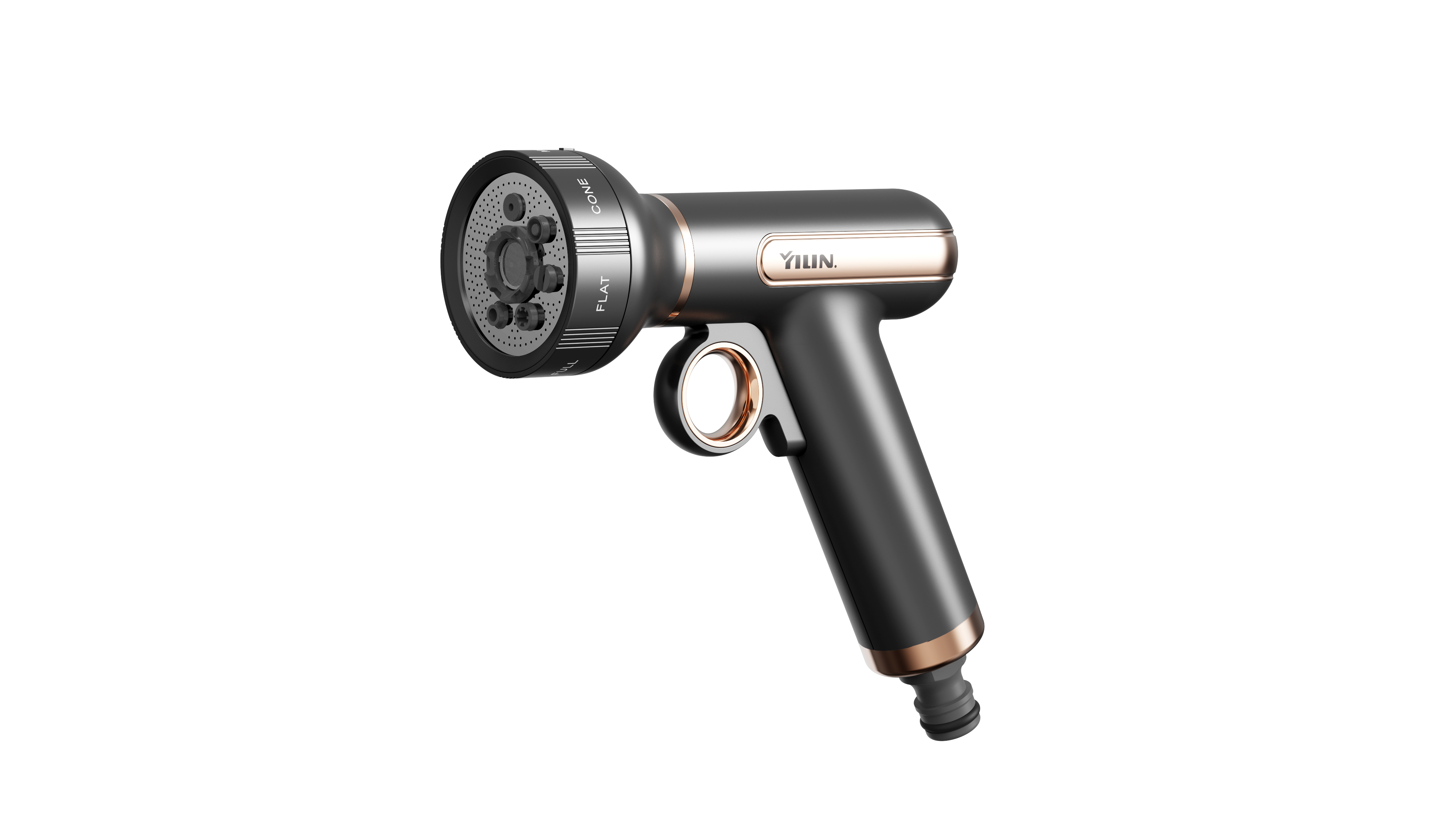
Why Standard Garden Sprayers Fail at Commercial Scale
Operational Breakdown: Downtime, Leakage, and Calibration Drift in Retail-Grade Units
Consumer-grade garden sprayers consistently underperform in commercial landscapes due to three interrelated failures. Plastic components warp under repeated chemical exposure—especially with solvent-based herbicides—causing 30%+ operational interruptions during peak seasons. Seals and valves degrade prematurely, leading to chronic leakage that wastes product and poses safety risks. Calibration drift further undermines reliability: adjustable nozzles lose precision after just 50 hours of use, resulting in inconsistent coverage and costly rework. These issues stem from thin-wall construction, non-chemical-resistant materials, and minimal quality assurance—design choices acceptable for occasional residential use but unsustainable for daily professional deployment.
The Scale Mismatch: How Area Coverage, Frequency, and Chemical Load Exceed Consumer Design Limits
The core failure isn’t misuse—it’s a fundamental engineering mismatch. Residential sprayers are built for light, infrequent tasks; commercial operations demand durability, capacity, and consistency at scale:
| Parameter | Consumer Design Limits | Commercial Requirements |
|---|---|---|
| Daily Area Coverage | ≤ 500 sq. ft. | 5+ acres |
| Chemical Tank Capacity | 1–2 gallons | 15+ gallons |
| Weekly Usage Cycles | 3–5 applications | 40+ applications |
| Chemical Concentration | Mild fertilizers | Industrial herbicides |
Pump mechanisms rated for 50 PSI falter when required to sustain 60+ PSI continuously. Handheld wands induce fatigue during 8-hour shifts—where wheeled units extend productivity and reduce strain. Most critically, thermoplastic tanks degrade rapidly under weekly exposure to concentrated glyphosate, unlike the diluted, monthly residential applications they’re designed for. This workload gap confirms that specialized equipment isn’t an upgrade—it’s an operational necessity.
Core Functional Requirements for Reliable Bulk Garden Sprayer Performance
Pressure, Flow Rate, and Tank Capacity: Engineering Specifications That Match Real-World Workflow Demands
Commercial landscape operations demand sprayers engineered for relentless daily use—not weekend gardening. Piston or centrifugal pumps maintaining stable 30–60 PSI pressure ensure consistent droplet size and uniform coverage across herbicides, pesticides, and fertilizers. Flow rates must exceed 1.5 GPM to keep pace with large-turf applications, while tanks under 30 liters (≈8 gallons) create excessive refill downtime. Industry data shows crews using wheeled 50L+ units cover 40% more daily acreage than backpack users—primarily by eliminating refills and reducing operator fatigue. Nozzle selection is equally critical: flat-fan tips for targeted weed control, hollow-cone for broad fungicide coverage, and air-induction models to suppress drift in sensitive environments.
Chemical Compatibility and Material Durability: Avoiding Corrosion, Swelling, and Premature Failure
Chemical resistance defines long-term viability. Polyethylene tanks swell and crack when exposed to solvent-based herbicides; brass fittings corrode rapidly with ammonium-based fertilizers. Instead, specify virgin polypropylene tanks and stainless-steel or ceramic internal components—materials proven to resist swelling, stress cracking, and galvanic corrosion, even with frequent acidic cleansers. Pump diaphragms require special attention: synthetic rubber compounds withstand oil-emulsified insecticides far longer than natural latex. Proactive material selection reduces equipment replacement costs by 70% over three years, according to maintenance logs from large-scale operators tracked by the Professional Grounds Management Society.
Ergonomic and Operational Efficiency: Reducing TCO Through Smart Garden Sprayer Design
Wheeled vs. Backpack vs. Skid-Mount: Impact on Operator Fatigue, Mobility, and Daily Output
Landscape crews face clear trade-offs among sprayer configurations—each shaping efficiency, safety, and output. Wheeled units eliminate carrying weight and reduce fatigue on flat terrain, but struggle with slopes and dense plantings. Backpack models offer unmatched access in tight spaces yet increase musculoskeletal strain—daily output drops 20–35% versus wheeled alternatives after four hours. Skid-mount systems maximize capacity for large-scale applications but depend on vehicle integration, limiting flexibility for spot treatments.
| Configuration | Mobility | Operator Fatigue | Daily Output |
|---|---|---|---|
| Wheeled | Moderate (flat terrain) | Low | 1.5–2 acres/hour |
| Backpack | High (all terrains) | High (4 hours) | 1–1.3 acres/hour |
| Skid-Mount | Low (vehicle-dependent) | Minimal | 2.5+ acres/hour |
Power Source Trade-offs: Battery-Powered Consistency vs. Manual Simplicity vs. Engine-Driven Power
Total cost of ownership hinges on power source performance and sustainability. Manual pump sprayers offer low upfront cost but deliver inconsistent pressure—causing uneven application and 15–20% chemical waste. Engine-driven systems provide high-pressure reliability for large areas but add fuel expenses, emissions, and maintenance complexity. Modern battery-powered sprayers strike the optimal balance: emission-free operation with regulated pressure (±5% variance), reducing chemical usage by 12–18% while eliminating refueling downtime—making them especially valuable in high-frequency, urban, or environmentally sensitive maintenance schedules.
FAQ
Why do consumer-grade garden sprayers fail at commercial scale?
Consumer-grade sprayers fail due to their thin-wall construction, non-chemical-resistant materials, and minimal quality assurance, resulting in issues like leakage, calibration drift, and operational downtime during heavy use.
What are the primary differences between consumer and commercial sprayers?
Commercial sprayers feature higher daily area coverage, larger tank capacity, sustained chemical resistance, and robust materials that stand up to industrial-strength chemicals and frequent use.
Which sprayer configurations are most efficient for large-scale applications?
Skid-mount systems are the most efficient for large-scale applications due to their higher capacity, minimal operator fatigue, and excellent daily output when integrated with vehicles.
Are battery-powered sprayers more cost-effective than manual or engine-powered units?
Yes, battery-powered sprayers are more efficient and eco-friendly, offering consistent pressure and reducing chemical waste while eliminating refueling downtime and minimizing emissions.
Table of Contents
- Why Standard Garden Sprayers Fail at Commercial Scale
- Core Functional Requirements for Reliable Bulk Garden Sprayer Performance
- Ergonomic and Operational Efficiency: Reducing TCO Through Smart Garden Sprayer Design
-
FAQ
- Why do consumer-grade garden sprayers fail at commercial scale?
- What are the primary differences between consumer and commercial sprayers?
- Which sprayer configurations are most efficient for large-scale applications?
- Are battery-powered sprayers more cost-effective than manual or engine-powered units?
